"Our Children and Grandchildren are not merely statistics towards which we can be indifferent" JFK
Showing posts with label FHA. Show all posts

Wednesday, December 8, 2010

White House deems home equity an unalienable right within the Declaration of Independence

Once again, the U.S. Government is initiating yet another
program to remove the burden of responsibility off the
shoulders of a specific group of American citizens.
According to the present administration, our
unalienable rights within The Declaration of Independence
 include life, liberty, the pursuit of happiness
and guaranteed home equity.

"Responsibility" Food For Thought
  • Responsibility is the price of greatness. (Winston Churchill)
  • We are responsible for actions performed in response to circumstances for which we are not responsible. (Allan Massie)
  • You cannot escape the responsibility of tomorrow by evading it today. (Abraham Lincoln)
By Nick Timiraos and Alan Zibel
The Wall Street Journal
12/7/10 

Fannie Mae and Freddie Mac are in talks with Obama administration officials to join fledgling government programs aimed at reducing loan balances of mortgages where borrowers owe more than their homes are worth, according to people familiar with the situation.

An agreement with the two government-owned mortgage giants to write down so-called underwater loans could reduce the threat to the U.S. housing market from the glut of homeowners believed at risk of default should their personal finances or home prices worsen. A deal would deepen losses at Fannie Mae and Freddie Mac, which already have cost taxpayers about $134 billion.

Fannie Mae and Freddie Mac, which own or guarantee about half of all first-lien mortgages in the U.S., have been highly reluctant to reduce loan balances, especially for borrowers who are still making payments.

The Obama administration is pressuring Fannie Mae and Freddie Mac, through their primary regulator, the Federal Housing Finance Agency. The administration wants the firms to join a program run by the Federal Housing Administration that allows banks and other creditors, which agree to write down mortgages, to essentially hand off the reduced loans to the FHA.

Federal officials estimate that 500,000 to 1.5 million homeowners could benefit from the program—a fraction of the estimated 11 million borrowers who were underwater as of June 30, according to CoreLogic Inc. That figure represents about 23% of all U.S. households with a mortgage. Complete article and chart


If people concentrated on their responsibilities, others would have their rights. (Stuart Briscoe)

Tuesday, November 16, 2010

FHA Auditors Predict Further Home Price Declines

Diana Olick
CNBC
11/16/10

The bad loans of the housing boom are still bad, but the new loans from today's tighter mortgage market are so much better that they're offsetting the trouble. That's the message from the Federal Housing Administration in its annual report to congress.  

The FHA, currently the only low down payment option around, provided access to credit for close to 40 percent of purchase mortgages in the past year.

"FHA’s study finds that since last year, the capital reserve ratio held steady, insurance claims declined significantly, and the economic value of FHA’s single-family insurance program grew by more than $1 billion, from $3.6 billion in 2009 to $4.7 billion in 2010," leads the report.

The FHA has instituted several reforms recently, raising rates, standards and prices for borrowers as well as policing FHA lenders far more stringently. Those changes will likely contribute to better performance in the future, although the FHA's report claims the 21 percent drop in insurance claims in FY 2010 came well before those changes.

The FHA, which insured $319 billion in single-family mortgages in FY 2010, second only to FY 2009's volume, is still bleeding cash from its pre-2009 book of business. "Seller-financed down payment assistance loans" which are now prohibited, "produced $6.6 billion in claims to-date and may ultimately cost FHA $13.6 billion." They are the primary reason the FHA's capital reserve ratio, which measures reserves in excess of those needed to cover projected losses over the next 30 years, sits at .50, well below its congressionally mandated threshold of two percent of all insurance-in-force. That's the bad news; the good news is that the ratio didn't mover much from .53 last year, and reserves rose, as noted above. The ratio fell because the FHA is insuring more loans now.

But here's what I find most interesting in the report about that change from .53 to .50:

The difference is primarily attributed to the use of much more conservative assumptions regarding future house price growth than were used last year, which also resulted in an $8.5 billion decrease in economic value. However, that decrease was offset by a variety of factors, including an $8.7 billion increase in value due to better credit quality, loan performance, and the premium increase implemented earlier this year.

So the auditing firm (Integrated Financial Engineering of Rockville, MD) decided that home prices would, in fact, deteriorate.

It's not like we haven't been saying that all along, but it's interesting to hear it from such an important entity projecting the future financial health of a major government agency.


Friday, October 29, 2010

Where's the HAMP Loan Data?

By Julie Vorman
The Center for Public Integrity
10/27/10

The Treasury Department should stop dragging its feet and release some of the specific loan-level data it has collected from mortgage servicers in the Home Affordable Modification Program (HAMP), a consumer advocacy group says.

“For over a year, it has promised to release the loan-level data to policymakers, researchers, and the public, but whenever asked, the promised date of release is pushed back,” Julia Gordon, a lawyer with the Center for Responsible Lending, told the Congressional Oversight Panel on TARP at a hearing today.

The data – once scrubbed of names and Social Security numbers – can shed light on which borrowers are getting HAMP modifications, the types of modifications being provided, and patterns of re-defaults that are occurring, she said. “Given the significant racial and ethnic inequities that have plagued the mortgage market, detailed demographic data for each servicer is of vital importance to all stakeholders,” she added.

Gordon also said one of the first priorities of the Consumer Financial Protection Bureau should be to “quickly move to regulate the [loan] servicing industry” and whether they are complying with contractual obligations to the Federal Housing Administration and the Veterans Administration. The bureau officially opens its doors in July with wide-ranging powers to write regulations that protect consumers from abusive practices by the financial services industry.

Likewise, the FHA and VA should ensure their loan servicers are following all relevant laws, Gordon said. And the Housing and Urban Development Department should terminate contracts with loan servicers that don’t follow the rules, and disclose the “loss mitigation” efforts by servicers to renegotiate mortgage terms to help homeowners avoid foreclosure, she said.

The Dodd-Frank reform law requires loan servicers to disclose how they arrived at the decision to deny a loan modification. The Treasury Department is also required to create a website so homeowners can access the HAMP program’s net present value model and see if loan servicers used it accurately in their case.

HAMP, created in early 2009, offered $50 billion in incentives for U.S. banks to restructure home mortgages and initially projected the program would help 3 to 4 million homeowners. However, as of last month, only 429,000 mortgages were permanently modified under the program.


Monday, October 11, 2010

HUD Seeking Authority to Charge Lenders for not Following FHA Guidelines (Housing Wire)

By Jon Prior
Housing Wire

The Department of Housing and Urban Development pushed for more authority to charge lenders for writing nonperforming mortgages that did not meet Federal Housing Administration guidelines.

Under the new proposal, HUD would force FHA lenders to pay the government for "serious and material" violations of origination guidelines. HUD will charge a lender for compensation if it failed to verify and analyze the creditworthiness, income, and employment of a borrower who defaulted on an FHA-backed loan.

Lenders also will be charged if they didn't verify the source of assets the borrower used to make the downpayment or closing costs. HUD will determine if the lender addressed property deficiencies identified by the appraiser and ensure FHA-appraisal requirements were met.

Any violation found will result in penalties to the lender.

For those cases not involving fraud or misrepresentation from the borrower, HUD requires a penalty to be set within five years of the FHA endorsement. But with the new proposal HUD will set a "reasonable time period" for those cases where fraud was detected.

"It's important that our expectations are crystal clear," said FHA commissioner David Stevens. "We need to clarify which circumstances we'll require indemnification and the level of loan performance we expect lenders to maintain."

The new proposal would also allow HUD to grant FHA approval to one-state lenders under different standards. Under current guidelines, HUD gives unconditional, direct endorsement to lenders who can self-insure their own mortgages and hold a default and claim rate at or below 150% of the national average for insured mortgages for the previous two years.

The new proposal compares single-state lenders to the average default rate for insured mortgages in the state it operates in.

Wednesday, September 15, 2010

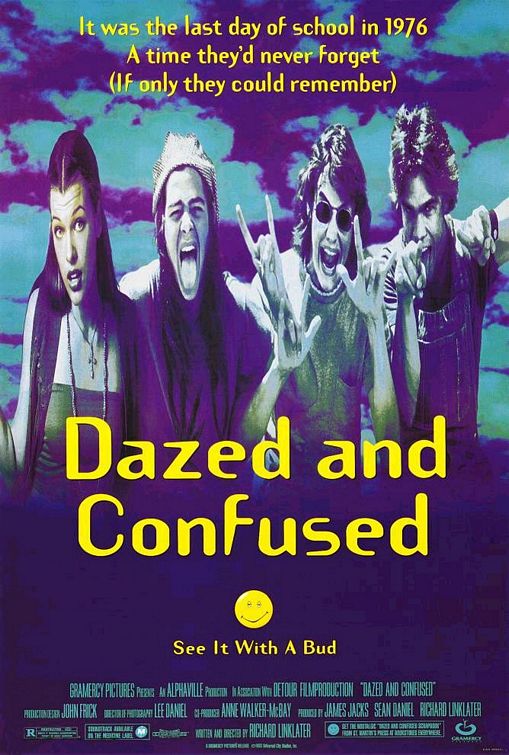
Fannie Mae Still Dazed and CONfused...now sees how sales down 7.4 percent

Fannie Mae..Still Dazed and CONfused
  • March 2010 revised home sales projection to up 9% from up 12%
  • April 2010 revised home sales to up 6% from 9%
  • May 2010 revised home sales to up 5.5% from 6%
  • June 2010 revised home sales to up 3.2% from 5.5%
  • July 2010 revised home sales to up 2.8% from 3.2%
  • August 2010 revised home sales to up 0.8% from up 2.8%
  • September 2010 revised home sales to down 7.4% from up 0.8%


Reporting by Al Noon; Editing by Padraic Cassidy)
(Reuters) - Fannie Mae (FNMA.OB), the largest U.S. mortgage funding company, on Wednesday sharply cut its forecast for annual home sales following weaker-than-expected activity in the second quarter.

The company is predicting total U.S. sales of new and existing homes in 2010 will drop 7.4 percent from 2009, compared with expectations for a 0.8 percent rise in its forecast last month. It means sales would fall to about 5.12 million homes from 5.53 million units in 2009.

The revision comes after a string of "grim" housing data following the expiration of federal tax credits for first-time home buyers, Fannie Mae economists, led by Doug Duncan, said in a monthly note. The decline in sales was also reflected in a drop in construction spending, which suggested housing would be a bigger-than-expected drag on the U.S. economy, they said.

"We expect residential investment to subtract from economic growth this year for the fifth consecutive year," they said. This is "an unusual phenomenon compared with past economic recoveries when housing acted as a strong boost."

Even so, Fannie Mae expects prices on single-family homes to rebound slightly in the fourth quarter on a year-over-year basis, marking a reversal from previous months' forecasts for a drop in all four quarters of 2010.

The price forecast is based on the Federal Housing Finance Agency's home purchase index

Monday, September 6, 2010

Another homeowner gift to be announced and yes, grandchildren will again be stuck with the bill

The U.S. Government continues to promote next to nada down payment mortgages and when conditions go awry for the homeowners with no skin in the game, they propose transferring the risk to future taxpayers (a.k.a. children and grandchildren).

By Nick Timiraos
Wall Street Journal

The Obama administration on Tuesday will launch its most ambitious effort at reducing mortgage balances for homeowners who owe more than their homes are worth.

The Gift that Keeps on Giving and our
grandchildren must pay for homeowners with no skin in the game!
Officials say between 500,000 and 1.5 million so-called underwater loans could be modified through the program, the first initiative to target homeowners who are current on their mortgage payments but are at risk of default because they have no equity in their homes. Some experts are warning, however, that the same knots that tied up prior initiatives could do so again.

Under the new "short refinance" program, banks and other creditors that write down mortgages to less than the value of the property can essentially hand off the reduced loan to the government. The process involves refinancing borrowers into loans backed by the Federal Housing Administration.

1 in 5 loans could default
While the program puts taxpayers at risk—officials estimate one in five loans in the program could default—the government has set aside $14 billion previously earmarked for housing aid from the Troubled Asset Relief Program to cover losses.

The new program, which was announced in March, is starting as the housing market shows signs of renewed trouble and as the Obama administration's signature Home Affordable Modification Program, or HAMP, falls short of its goals of helping three million homeowners. Half of the 1.3 million borrowers that enrolled in temporary loan modifications have fallen out of HAMP because they didn't qualify. Only one-third has received permanent modifications.

How many snorkelers if the down payment was 10 to 20%?
One of the biggest dangers facing the housing market is the glut of underwater homeowners who could default if their personal finances or home prices worsen. About 11 million borrowers, or 23% households with a mortgage, were underwater as of June 30, according to CoreLogic Inc.

My baseball collection is worth less than I paid so how about me...??
The White House hopes to reach borrowers like Irene Gerloff, 62 years old, who was turned down for a loan modification because she can afford her payments. While she owes $292,000 on her two-bedroom condominium in La Habra, Calif., the property is probably worth less than $200,000.

She is worried about what happens in five years, when her "interest-only" loan begins requiring much larger payments. "If things don't improve between now and 2015, I'm going to have to let this house go," said Ms. Gerloff, a secretary.

Bank or investor must agree...that screws up mark-to-model
But not every homeowner who is underwater can participate. The bank or investors that own the loan must be willing to write down its value.

The administration's plan doesn't target loans held by Fannie Mae and Freddie Mac, which own or guarantee half of the $10 trillion in U.S. first-mortgage debt, to avoid inflicting big upfront losses.

Instead, officials hope to reach more loans that were bundled by Wall Street firms and sold to investors as mortgage-backed securities. For more than a year, many of those investors, which include hedge funds and pension funds, have been clamoring for such a program because they have already had to mark down the value of their holdings.

PIMCO weighs in...surprise
"It'll take some really crappy loans out of the marketplace…and replace them with much higher-quality" mortgages, said Scott Simon, a managing director at Pacific Investment Management  Co.

But that could be hard to do because mortgage servicers, which handle loan payments and decide which loans should be modified, are overwhelmed. And some borrowers might be discouraged from taking part because receiving a principal reduction will show up on their credit score.

Moreover, investors may not be able to participate as hoped because certain contracts that govern mortgage securitizations say modifications can only proceed if there is an "imminent" risk that the borrower would default.

Reducing balances for borrowers who are current could open mortgage servicers to lawsuits from investors that hold the riskiest slices of bonds. Those investors would be wiped out if balances are greatly reduced. For that reason, "lenders are going to be especially reluctant to do short refinances on folks who are current," says Alan White, an assistant professor at Valparaiso University in Indiana.

Not a panacea and cautiously optimistic...
let's stick it to the grandkids anyway
Officials stress the new program isn't going to be a panacea. But they say that it should give servicers flexibility to modify current loans, and that they are "cautiously optimistic."

"We've heard a lot of positive feedback from servicers and from investment groups to be able to write down" loans, said Vicki Bott, a senior FHA official.

Analysts say that the program is most likely to succeed on loans that banks already own in their portfolios. It could also provide investors with a vehicle for getting rid of loans that have been modified and are current again. "It's going to be a 'take out' for modified loans," said Laurie Goodman, a senior managing director at mortgage-bond trader Amherst Securities Group LP in New York.

The program must resolve a stubborn problem that has hindered every other modification program: how to deal with second mortgages. The program says second liens must be reduced so that the total mortgage debt is less than 115% of the home's current value. The government will make partial payments for banks to reduce those loans, but banks have been very reluctant to write down seconds that are current.

Let's not foget our banking buddies in 2nd position
Investors that hold first mortgages are leery of writing down their loans without extinguishing the second because junior-liens are in a first-loss position. On a loan that has a second behind it and is heavily upside-down, "do I take the write-down and effectively pay off the second? I don't think so. That second is worthless," said Vincent Fiorillo, portfolio manager at Doubleline Capital, a Los Angeles-based fixed-income manager.

He said the program could work for loans without seconds, though he says it's possible many borrowers will still have too much debt to qualify for an FHA-backed loan.

The initiative also comes as mortgage rates fall to their lowest levels in more than 50 years. Average rates on 30-year fixed-rate loans dropped to 4.43% last week, down from 4.55% during the previous week, according to a survey published Wednesday by the Mortgage Bankers Association.