


By: Peter Schiff
Euro Pacific Capital
Monday, April 18, 2011
The only thing more ridiculous than S and P’s too little too late semi-downgrade of U.S. sovereign debt was the market’s severe reaction to the announcement. Has S and P really added anything to the debate that wasn’t already widely known? In any event, S and P’s statement amounts to a wakeup call to anyone who has somehow managed to sleepwalk through the unprecedented debt explosion of the last few years.
Given S and P’s concerns that Congress will fail to address its long-term fiscal problems, on what basis can it conclude that the U.S. deserves its AAA credit rating? The highest possible rating should be reserved for fiscally responsible nations where the fiscal outlook is crystal clear. If S and P has genuine concerns that the U.S. will not deal with its out of control deficits, the AAA rating should be reduced right now.
By its own admission, S and P is unsure whether Congress will take the necessary steps to get America’s fiscal house in order. Given that uncertainty, it should immediately reduce its rating on U.S. sovereign debt several notches below AAA. Then if the U.S. does get its fiscal house in order, the AAA rating could be restored. If on the other hand, the situation deteriorates, additional downgrades would be in order.
AAA is the highest rating S and P can give. It is the Wall Street equivalent to a “strong buy.” If a stock analyst has serious concerns that a company may go bankrupt, would he maintain a “strong buy” on the assumption that there was still a possibility that bankruptcy could be averted? If the company declared bankruptcy, would the analyst reduce his rating from “strong buy” to “accumulate”?
In truth, if bankruptcy is even possible, the rating should be reduced to “hold,” at best. Only if the outlook improves to the point where bankruptcy is out of the picture should a stock be upgraded to “buy.” A “hold” rating would at least send the message to potential buyers that problems loom. Then if the company does declare bankruptcy, at least it does not do so sporting a “buy” rating.
Of course, by shifting to a negative outlook, S and P will try to have its cake and eat it too. In the unlikely event that Congress does act responsibly to restore fiscal prudence, its AAA would be validated. If on the other hand, out of control deficits lead to outright default or hyperinflation, it will hang its hat on the timely warning of its negative outlook. This is like a stock analyst putting a strong buy on a stock, but qualifying the rating as being speculative.
The bottom line is that the AAA rating on U.S. sovereign debt is pure politics. S and P simply does not have the integrity to honestly rate U.S. debt. It has too cozy a relationship with the U.S. government and Wall Street to threaten the status quo. In fact, given the culpability of the rating agencies in the financial crisis, it may well be a quid pro quo that as long as the U.S.’ AAA rating is maintained, the rating agencies will continue to enjoy their government sanctioned monopolies, and that no criminal or civil charges will be filed related to inappropriately rated mortgage-backed securities.
Remember S and P had investment grade, AAA, ratings on countless mortgage-backed securities right up until the moment the paper became worthless. Amazingly, the rating agencies somehow maintained their status, and their ability to move markets, after the dust settled.
Currently, they are making the same mistake with U.S. Treasuries. Once it becomes obvious to everyone that the U.S. will either default on its debt or inflate its obligations away, S&P might downgrade treasuries to AA+. Such a move will be of little comfort to those investors left holding the bag.
In its analysis of U.S. solvency, S and P typically factors in the government’s ability to print its way out of any fiscal jam. As a result, it applies a very different set of criteria in its analysis of investment risk than it would for a private company, or even a government whose currency has no reserve status. But the agency completely fails to consider how reckless printing will impact the value of the dollar itself. It can assure investors that they will be repaid, but the agency doesn’t spare a thought about what if anything our creditors may be able to buy with their dollars.
More Peter Schiff
Showing posts with label Rating Agencies. Show all posts
Showing posts with label Rating Agencies. Show all posts
Tuesday, April 19, 2011


Thursday, January 13, 2011
Standard and Poor's/Moody's Warn U.S. On Credit Rating
"No triple-A rating is forever"
The Wall Street Journal
by Mark Brown and
Nathalie Boschat
January 13, 2011
LONDON—Two leading credit rating agencies on Thursday cautioned the U.S. on its credit rating, expressing concern over a deteriorating fiscal situation that they say needs correction.
Moody's Investors Service said in a report Thursday that the U.S. will need to reverse an upward trajectory in the debt ratios to support its triple-A rating.
"We have become increasingly clear about the fact that if there are not offsetting measures to reverse the deterioration in negative fundamentals in the U.S., the likelihood of a negative outlook over the next two years will increase," said Sarah Carlson, senior analyst at Moody's.
Standard and Poor's Corp. on Thursday also didn't rule out changing the outlook for its U.S. sovereign-debt rating because of the recent deterioration of the country's fiscal situation. The U.S. currently has a triple-A rating with a stable outlook at both agencies.
"The view of markets is that the U.S. will continue to benefit from the exorbitant privilege linked to the U.S. dollar" to fund its deficits, Carol Sirou, head of S and P France, said at a Paris conference Thursday. "But that may change. We can't rule out changing the outlook" on the U.S. sovereign debt rating in the future, she warned. She added the jobless nature of the U.S. recovery was one of the biggest threats to the U.S. economy. "No triple-A rating is forever," she said.
Moody's said the U.S., Germany, France and the U.K. still have debt metrics, including the debt affordability, compatible with their triple-A ratings at Moody's. But all four countries must bring the future costs arising from pension and healthcare subsidies under control if they "are to maintain long-term stability in their debt burden credit metrics," Moody's said in its regular triple-A Sovereign Monitor report.
Moody's noted that measures were recommended by the U.S. National Commission on Fiscal Responsibility and Reform, appointed by President Obama, to achieve a balanced primary budget by 2015, but that there was insufficient support to trigger consideration of those recommendations by the full Congress.
They included a wide variety of measures, including Social Security reform, cutbacks in the growth of Medicare outlays, elimination or modification of the mortgage interest tax deduction, a gasoline tax and other measures, Moody's said.
"In Moody's view, a plan that would result in a reversal of the upward trajectory in the debt ratios would indeed be supportive of the country's Aaa rating," the ratings agency said in its report. "However, it is unlikely that the Commission's recommendations will be adopted."
The most recent official figures show the ratio of federal debt to revenue averaging 397% of gross domestic product in the period to 2020, while the ratio of interest to revenue will rise to 17.6% by 2020, from 8.6% in the last fiscal year. "These figures are "quite high for an Aaa-rated country," Moody's said. Read On
CMBS Delinquencies up a mere 79% in 2010 (Moody's)
Wall Street Journal
1/12/2011
By Matt Jarzemsky, Dow Jones Newswires
Delinquencies on loans in U.S. commercial mortgage-backed securities, or CMBS, rose for the seventh-straight month in December, Moody's Investors Service said.
Last month's 8.79% rate was up from 8.63% in November and 4.9% at the end of 2009. Loans soured rapidly early last year but the growth in delinquencies moderated in the second half.
Commercial real estate has been pummeled as reduced occupancy rates and rents have put pressure on property owners, often causing them to fall behind on interest payments. Meanwhile, tightened credit standards and sharply lower property values have made it harder for landlords to refinance or sell buildings to repay maturing loans.
"The rate of newly delinquent loans is likely to continue moderating in the coming year as capital markets continue to heal and the flow of loans into special servicing slows," Moody's Managing Director Nick Levidy said.
In December, the total balance of delinquent loans increased by $1.1 billion to $54.9 billion.
Hotels again had the highest delinquency rate, at 16.37% for December, but were also the most-improved asset class as that was 0.05 percentage point lower than a month earlier. Industrial had the lowest rate, at 6.54%.
All four U.S. regions saw delinquency rates increase modestly. The South had the highest rate, at 11%. The best-performing region was the East, at 6.7%.
1/12/2011
By Matt Jarzemsky, Dow Jones Newswires
Delinquencies on loans in U.S. commercial mortgage-backed securities, or CMBS, rose for the seventh-straight month in December, Moody's Investors Service said.
Last month's 8.79% rate was up from 8.63% in November and 4.9% at the end of 2009. Loans soured rapidly early last year but the growth in delinquencies moderated in the second half.
Commercial real estate has been pummeled as reduced occupancy rates and rents have put pressure on property owners, often causing them to fall behind on interest payments. Meanwhile, tightened credit standards and sharply lower property values have made it harder for landlords to refinance or sell buildings to repay maturing loans.
"The rate of newly delinquent loans is likely to continue moderating in the coming year as capital markets continue to heal and the flow of loans into special servicing slows," Moody's Managing Director Nick Levidy said.
In December, the total balance of delinquent loans increased by $1.1 billion to $54.9 billion.
Hotels again had the highest delinquency rate, at 16.37% for December, but were also the most-improved asset class as that was 0.05 percentage point lower than a month earlier. Industrial had the lowest rate, at 6.54%.
All four U.S. regions saw delinquency rates increase modestly. The South had the highest rate, at 11%. The best-performing region was the East, at 6.7%.
More from Housing Wire
The number of delinquencies within the conduit/fusion space of commercial mortgage-backed securities rose 79% in 2010, ending December at 8.79% up from 4.9% a year earlier, according to Moody's Investors Service.Thursday, January 6, 2011
No states rated by Moody’s will default this year...Promise, cross my heart and...
Moody's, the very same rating agency that continued to rate residential CDO's AAA even though they were infested with subprime toxic waste. Let's travel back to April 2010, when a couple of Moody's best and brightest testified before a Congressional subcommittee regarding their role in our overall mortgage mess:
Eric Kolchinsky, who was in charge of the Moody's unit that rated subprime collateralized debt obligations (CDO’s):
Eric Kolchinsky, who was in charge of the Moody's unit that rated subprime collateralized debt obligations (CDO’s):
- “people across the financial food chain, from the mortgage broker to the CDO banker, were compensated based on quantity rather than quality".
- "The situation was no different at the rating agencies."“I believed that to assign new ratings based on assumptions which I knew to be wrong would constitute securities fraud”
- "We, like many others, did not anticipate the unprecedented confluence of forces that drove the unusually poor performance of subprime mortgages in the past several years".
- Moody's "is certainly not satisfied with the performance of our ratings during the unprecedented market downturn of the past two years."
No states rated by Moody’s will default this year
(sleep well)
By Martin Z. Braun
Jan. 6 (Bloomberg) -- U.S. municipal governments, facing more than $100 billion in budget deficits this year and the expiration of federal stimulus funds, will be able to weather lower demand for debt and increased borrowing costs, Moody’s Investors Service said.
No states rated by Moody’s will default this year, although a few local governments may miss payments, the company said in a report. Few U.S. municipal governments borrow to fund short-term operating needs, the rating company said.
“Most municipal debt is used to finance capital projects, and governments have the ability to defer projects if they cannot finance them at rates that make sense,” said Moody’s analyst Naomi Richman. “Even many issuers of short-term cash- flow notes could draw down their available cash reserves.”
The $2.8 trillion municipal bond market has been buffeted in the past three months by predictions of mass defaults and a rush to issue federally subsidized Build America Bonds before it expired on Dec. 31. Banking analyst Meredith Whitney said she expected 50 to 100 “significant” municipal bond defaults in 2011 totaling “hundreds of billions.”
Whitney, who correctly predicted Citigroup Inc.’s dividend cut in 2008, has written a 600-page report on the financial health of the 15 largest states, which hasn’t been released publicly. She is applying to the U.S. Securities and Exchange Commission to start a ratings firm to compete with Moody’s and Standard & Poor’s, saying the companies lost credibility when billions of mortgage-backed securities they rated AAA were later downgraded to junk.
In a default study published last year, Moody’s found 54 defaults in municipal issuers it rated from 1970 to 2009. Only three were general governmental defaults. In 2010, $2.52 billion of municipal bonds defaulted, compared with $14.5 billion of corporate bonds, according to Distressed Debt Securities Newsletter. There were no defaults in 2010 by state or local governments rated by Moody’s. More Martin B. Braun Articles
Friday, October 22, 2010
Fitch Places Bank of America's IDRs on Rating Watch Negative
Fitch Places Bank of America's IDRs
on Rating Watch Negative
10/22/10
NEW YORK--(BUSINESS WIRE)--Fitch Ratings has placed the long-term and short-term Issuer Default Ratings (IDRs) as well as the Support and Support Floor ratings of Bank of America Corporation (BAC) on Rating Watch Negative following initial interpretation of the Dodd-Frank Wall Street Reform and Consumer Protection Act and its implications for systemically important financial institutions. Business Wire Press Release
Wednesday, September 8, 2010
Mary Schapiro thinks Flash Crash "Anxiety" may have contributed to retail investors running for the hills
By Marcy Gordon (AP)
9/7/10
WASHINGTON — Anxiety over May's "flash crash" on Wall Street may have contributed to the withdrawal of retail investors from the stock market in recent months, the head of the Securities and Exchange Commission said Tuesday.
SEC Chairman Mary Schapiro said the panicked disruption, which saw the Dow Jones industrials plunge nearly 1,000 points in less than a half-hour, "was clearly a market failure" that heightened concerns over the fast-evolving structure of the market.
Schapiro said the SEC has received written comments from brokerage firms saying their retail customers have pulled back from the market since the May 6 plunge. Many individual investors filed comments that are sharply critical of the current structure of the market, Schapiro said in a speech to the Economic Club of New York.
Schapiro acknowledged there could be many reasons for investors withdrawing from the market. But she said the issue is troubling, especially if investors' concerns about the market in the wake of the plunge "are playing even a small role in investor decision-making." More on Schapiro's Anxiety
I maintain retail investor "anxiety" stems from a history of the equity market pillaging retail investors and an absence of proactive enforcement courtesy of the Securities and Exchange Commission. Individual investors have been and continue to be duped and abused by Wall Street players and the CEO con artists of publically traded companies. Given the following "barely scratched the surface" recap, anguish and angst are better descriptors versus "anxiety".
9/7/10
WASHINGTON — Anxiety over May's "flash crash" on Wall Street may have contributed to the withdrawal of retail investors from the stock market in recent months, the head of the Securities and Exchange Commission said Tuesday.
SEC Chairman Mary Schapiro said the panicked disruption, which saw the Dow Jones industrials plunge nearly 1,000 points in less than a half-hour, "was clearly a market failure" that heightened concerns over the fast-evolving structure of the market.
Schapiro said the SEC has received written comments from brokerage firms saying their retail customers have pulled back from the market since the May 6 plunge. Many individual investors filed comments that are sharply critical of the current structure of the market, Schapiro said in a speech to the Economic Club of New York.
Schapiro acknowledged there could be many reasons for investors withdrawing from the market. But she said the issue is troubling, especially if investors' concerns about the market in the wake of the plunge "are playing even a small role in investor decision-making." More on Schapiro's Anxiety
Grandpa
Yes Mary, there very well could be many reasons for investors withdrawing from the market. Your choice of "withdrawing" is classic government "understatement speak" as retreating and fleeing from the market more aptly describe the retail investor. I maintain retail investor "anxiety" stems from a history of the equity market pillaging retail investors and an absence of proactive enforcement courtesy of the Securities and Exchange Commission. Individual investors have been and continue to be duped and abused by Wall Street players and the CEO con artists of publically traded companies. Given the following "barely scratched the surface" recap, anguish and angst are better descriptors versus "anxiety".
- Bernie "I do not believe I have anything to hide" Ebbers. Nothing to hide other than $11 Billion worth of WorldCom accounting statements.
- Jack "WorldCom Cheerleader" Grubman of Smith Barney who reiterated his buy rating 3 months prior to WorldCom filing for bankruptcy, cut to neutral one month later and cut to underperform 2 days prior to WorldCom filing for bankruptcy.
- Henry "internet stock pumper" Blodget of Merrill Lynch fined $4 million and banned from the securities industry for life. industry for life
- Ken "I was fooled" Lay during a four period made $217 million from stock options and another $19 million in salary and bonuses while running Enron into bankruptcy. Let's not forget while he was selling stock, he was advising employees to continue to purchase Enron stock.
- Lehman Brothers files for bankruptcy mid September 2008 while Moody's, Standard and Poor's and Fitch maintained at least an "A" rating right up to bankruptcy filing.
- Moody's maintained a AAA rating on AIG until hours prior to AIG's collapse.
- Bernie "I had a great run" Madoff and his $18 billion Ponzi Scheme.
- January 2006. The SEC and McAfee simultaneously settled the case (SEC complaint stating McAfee overstated its revenues by $622 million in order to meet revenue and earnings targets and understated its cumulative net losses by $353 million). McAfee paid a fine of $50 Million.
- August 2009, GE settles SEC fraud charges for $50 million without admitting or denying SEC's allegations.
- Marvell Technology Group settles with SEC ($10 million fine) on regulator's accusations of improper backdating of stock options. Marvell neither admitted nor denied wrongdoing but did agree to refrain from future violations of the securities laws
- A Federal judge said Monday (2/22/10) he would reluctantly approve an amended $150 million settlement between the Securities and Exchange Commission and Bank of America to end civil charges accusing the bank of misleading shareholders when it acquired Merrill Lynch.
- July 2010, Securities and Exchange Commission today announced that Goldman, Sachs & Co. will pay $550 million and reform its business practices to settle SEC charges that Goldman misled investors in a subprime mortgage product just as the U.S. housing market was starting to collapse. Goldman regrets that the marketing materials did not contain that disclosure.
- Ben Bernanke (5/17/07): “The sub prime mess is grave but largely contained. Given the fundamental factors in place that should support the demand for housing, we believe the effect of the troubles in the sub prime sector on the broader housing market will likely be limited”.
- April 2009, U.S. accounting rule makers (FASB) bowed to congressional and financial industry pressure on Thursday by allowing more flexibility in valuing toxic assets, a move expected to boost bank earnings and improve their capital levels.
- June 2010, More than half of the lobbying force seeking to influence landmark financial reform legislation is made up of former members of Congress, Capitol Hill staffers and executive branch employees, according to a Center for Public Integrity analysis
- August 2010, (AP-New York) — The 10 banks that received the most bailout aid during the financial crisis spent over $16 million on lobbying efforts in the first half of 2010, as the debate over financial regulatory reform reached its height.
- Regulators are scrutinizing what some in the stock market are calling "quote stuffing," trading in which unusually large numbers of orders to buy or sell stocks are placed in a fraction of a second, only to be canceled almost immediately. The Securities and Exchange Commission has begun looking into whether the practice is putting some investors at a disadvantage by distorting stock prices, according to people familiar with the matter.
Sunday, September 5, 2010
SEC says it lacked authority to charge Moody's
Marcy Gordon (AP)
WASHINGTON — The Securities and Exchange Commission has declined to seek fraud charges against Moody's Investors Services over its ratings of risky investments that led to the financial crisis.
But the SEC said it decided against seeking civil charges only because it determined it lacked authority to charge a foreign affiliate of Moody's.
Instead, in a report on its investigation, the SEC warned all credit rating agencies that they could face charges if they mislead investors with deceptive ratings.
Investors rely on the statements these agencies make in their applications and reports to the SEC, Robert Khuzami, the SEC enforcement director, said in a statement.
"It is crucial that (rating agencies) take steps to assure themselves of the accuracy of those statements and that they have in place sufficient internal controls over the procedures they use to determine credit ratings," he said.
The warning is the latest step by the SEC to address the conduct of major financial firms that contributed to the Wall Street meltdown. Goldman Sachs and Co. agreed in July to pay $550 million to settle civil fraud charges related to its sales of mortgage investments. And Citigroup Inc. agreed to pay $75 million to resolve charges it misled investors about billions of dollars in potential losses from subprime mortgages.
The financial overhaul law enacted in July calls for reducing the influence of the big three rating agencies — Moody's, Standard and Poor's and Fitch Ratings. They were discredited in the financial crisis for giving high ratings to risky mortgage securities.
The financial overhaul law also gave the SEC authority to pursue alleged fraud by foreign affiliates of U.S. rating agencies that could have a significant effect within the U.S.
The SEC accused Moody's of failing to disclose ratings misconduct by a European affiliate when it registered with the agency, as required by law at that time. Because the alleged misconduct occurred before the financial overhaul law took effect, the SEC said it lacked jurisdiction to pursue an enforcement case against Moody's.
According to the SEC report, a Moody's analyst found in 2007 that a computer error at the European affiliate had resulted in certain bonds receiving ratings that downplayed their level of risk. A Moody's rating committee later voted against changing the rating, partly out of concern that it would harm the firm's reputation, the SEC said.

A January 2007 e-mail quoted in the report, from a member of the rating committee to the panel's chair, said: "In this particular case we seem to face an important reputation risk issue."
Even "the possibility of a hint that the (computer) model has a bug" should be avoided, the panel member urged.

The committee's conduct violated Moody's risk practices as described in its application to register with the SEC, the agency said.
The report says the SEC will pursue antifraud actions involving deceptive ratings, including cases overseas.
Moody's spokesman Michael Adler said the firm was pleased that the matter was resolved and the SEC wasn't pursuing enforcement action. "We fully support the (SEC's) message that every rating decision must be based only on credit considerations, and we are committed to maintaining robust procedures to ensure that our internal company policies are followed," he said.
The rating agencies' grades of public companies and securities can affect a company's ability to raise or borrow money and how much investors will pay for securities. The big agencies assigned AAA ratings to securities tied to risky subprime mortgages that later went bad and helped cause the housing bust. Afterward, the agencies had to downgrade many of the bonds as home-loan delinquencies soared and the value of those investments sank.
WASHINGTON — The Securities and Exchange Commission has declined to seek fraud charges against Moody's Investors Services over its ratings of risky investments that led to the financial crisis.
But the SEC said it decided against seeking civil charges only because it determined it lacked authority to charge a foreign affiliate of Moody's.
Instead, in a report on its investigation, the SEC warned all credit rating agencies that they could face charges if they mislead investors with deceptive ratings.
Investors rely on the statements these agencies make in their applications and reports to the SEC, Robert Khuzami, the SEC enforcement director, said in a statement.
"It is crucial that (rating agencies) take steps to assure themselves of the accuracy of those statements and that they have in place sufficient internal controls over the procedures they use to determine credit ratings," he said.
The warning is the latest step by the SEC to address the conduct of major financial firms that contributed to the Wall Street meltdown. Goldman Sachs and Co. agreed in July to pay $550 million to settle civil fraud charges related to its sales of mortgage investments. And Citigroup Inc. agreed to pay $75 million to resolve charges it misled investors about billions of dollars in potential losses from subprime mortgages.
The financial overhaul law enacted in July calls for reducing the influence of the big three rating agencies — Moody's, Standard and Poor's and Fitch Ratings. They were discredited in the financial crisis for giving high ratings to risky mortgage securities.
The financial overhaul law also gave the SEC authority to pursue alleged fraud by foreign affiliates of U.S. rating agencies that could have a significant effect within the U.S.
The SEC accused Moody's of failing to disclose ratings misconduct by a European affiliate when it registered with the agency, as required by law at that time. Because the alleged misconduct occurred before the financial overhaul law took effect, the SEC said it lacked jurisdiction to pursue an enforcement case against Moody's.
According to the SEC report, a Moody's analyst found in 2007 that a computer error at the European affiliate had resulted in certain bonds receiving ratings that downplayed their level of risk. A Moody's rating committee later voted against changing the rating, partly out of concern that it would harm the firm's reputation, the SEC said.

A January 2007 e-mail quoted in the report, from a member of the rating committee to the panel's chair, said: "In this particular case we seem to face an important reputation risk issue."
Even "the possibility of a hint that the (computer) model has a bug" should be avoided, the panel member urged.

The committee's conduct violated Moody's risk practices as described in its application to register with the SEC, the agency said.
The report says the SEC will pursue antifraud actions involving deceptive ratings, including cases overseas.
Moody's spokesman Michael Adler said the firm was pleased that the matter was resolved and the SEC wasn't pursuing enforcement action. "We fully support the (SEC's) message that every rating decision must be based only on credit considerations, and we are committed to maintaining robust procedures to ensure that our internal company policies are followed," he said.
The rating agencies' grades of public companies and securities can affect a company's ability to raise or borrow money and how much investors will pay for securities. The big agencies assigned AAA ratings to securities tied to risky subprime mortgages that later went bad and helped cause the housing bust. Afterward, the agencies had to downgrade many of the bonds as home-loan delinquencies soared and the value of those investments sank.
Tuesday, July 13, 2010
China agency 'downgrades' US Treasuries (try to find this on CNBC or a U.S. publication)
Clancy Yeates
Sydney Morning Herald
CHINA is trying to turn the world of credit ratings on its head, by unveiling rival sovereign debt ratings that question the creditworthiness of major developed economies.
In its first report on sovereign debt, Dagong Global Credit Rating gave US Treasury bonds a AA rating with negative outlook, several rungs below the top AAA that it gave to just seven economies, including Australia.
In contrast, the major Western ratings agencies Standard & Poor's, Moody's and Fitch regard US government bonds as the world's safest asset - a view shared by markets.
Accusing the Western agencies of bias, Dagong also issued relatively low AA- ratings to Japan, Britain and France because of their large debt loads and poor growth prospects.
It warned that these countries could face higher funding costs if they failed to cut their deficits - a situation recently faced by the governments in Greece and Portugal.
China received a AA+ rating because of its ''sustainable fiscal strength'' and more optimistic economic outlook.
S&P, on the other hand, has given the world's most populous economy an A+ rating.
Dagong says its advice is independent and impartial, but the report was launched at the headquarters of Xinhua News Agency, the ruling Communist Party's main propaganda outlet.
The report covered 50 countries which Dagong said accounted for 90 per cent of the world's economic output.
Australia was one of a select group - which included New Zealand and Singapore - to receive the top rating from Dagong.
It said these governments had the strongest levels of solvency and were well placed to enjoy a recovery in the world economy.
In explaining its ratings, Dagong suggested its Western rivals were affected by ''ideology,'' and their ratings did not accurately reflect a government's ability to repay debt.
The report comes after the Chinese President, Hu Jintao, said in April that the world needs ''an objective, fair, and reasonable standard'' for rating sovereign debt.
The ratings could also have implications for the Chinese government's huge holdings of US government bonds, although the country ruled out dumping them earlier this month.
Grandpa: those crazy communists, Chinese President, Hu Jintao, said that the world needs ''an objective, fair, and reasonable standard'' for rating sovereign debt. Objective, fair and reasonable! This is the United States, home to Tim Geithner, Ben Bernanke, Larry Summers, Moody's, Fitch and Wall Street Banks. Fair and reasonable is so "old school". Keep in mind Mr. President, we are a democracy and as such the majority rules and that includes defining fair and reasonable.
With all due respect Mr. Hu Jintao, we have the best and brightest on Wall Street and in Congress. We are coming up on 2 years since the AIG bailout and our crack team of "representatives" are close to voting on a watered down, diluted and polluted financial reform bill to assure that Wall Street will once again peddle toxic financially engineered products around the globe.
Even Timmy Giethner stated our debt would never be downgraded and Ben Bernanke still references positive signs in our economy and neither would intentionally mislead the American people...would they?
Sydney Morning Herald
CHINA is trying to turn the world of credit ratings on its head, by unveiling rival sovereign debt ratings that question the creditworthiness of major developed economies.
In its first report on sovereign debt, Dagong Global Credit Rating gave US Treasury bonds a AA rating with negative outlook, several rungs below the top AAA that it gave to just seven economies, including Australia.
In contrast, the major Western ratings agencies Standard & Poor's, Moody's and Fitch regard US government bonds as the world's safest asset - a view shared by markets.
Accusing the Western agencies of bias, Dagong also issued relatively low AA- ratings to Japan, Britain and France because of their large debt loads and poor growth prospects.
It warned that these countries could face higher funding costs if they failed to cut their deficits - a situation recently faced by the governments in Greece and Portugal.
China received a AA+ rating because of its ''sustainable fiscal strength'' and more optimistic economic outlook.
S&P, on the other hand, has given the world's most populous economy an A+ rating.
Dagong says its advice is independent and impartial, but the report was launched at the headquarters of Xinhua News Agency, the ruling Communist Party's main propaganda outlet.
The report covered 50 countries which Dagong said accounted for 90 per cent of the world's economic output.
Australia was one of a select group - which included New Zealand and Singapore - to receive the top rating from Dagong.
It said these governments had the strongest levels of solvency and were well placed to enjoy a recovery in the world economy.
In explaining its ratings, Dagong suggested its Western rivals were affected by ''ideology,'' and their ratings did not accurately reflect a government's ability to repay debt.
The report comes after the Chinese President, Hu Jintao, said in April that the world needs ''an objective, fair, and reasonable standard'' for rating sovereign debt.
The ratings could also have implications for the Chinese government's huge holdings of US government bonds, although the country ruled out dumping them earlier this month.
Grandpa: those crazy communists, Chinese President, Hu Jintao, said that the world needs ''an objective, fair, and reasonable standard'' for rating sovereign debt. Objective, fair and reasonable! This is the United States, home to Tim Geithner, Ben Bernanke, Larry Summers, Moody's, Fitch and Wall Street Banks. Fair and reasonable is so "old school". Keep in mind Mr. President, we are a democracy and as such the majority rules and that includes defining fair and reasonable.
With all due respect Mr. Hu Jintao, we have the best and brightest on Wall Street and in Congress. We are coming up on 2 years since the AIG bailout and our crack team of "representatives" are close to voting on a watered down, diluted and polluted financial reform bill to assure that Wall Street will once again peddle toxic financially engineered products around the globe.
Even Timmy Giethner stated our debt would never be downgraded and Ben Bernanke still references positive signs in our economy and neither would intentionally mislead the American people...would they?
Friday, June 11, 2010
Moody's: CMBS Delinquencies Rise In May, Outlook Deteriorates (WSJ)
Moody's: CMBS Delinquencies Rise In May, Outlook Deteriorates
DOW JONES NEWSWIRES Moody's Investors Service said delinquencies on loans in U.S. commercial mortgage backed securities increased further in May as the agency also boosted its year-end estimate of where the rate will be.
Last month's half-point jump--to 7.5% from 7%--follows two months of abating rates of growth.
Meanwhile, Moody's now projects the Commercial Mortgage Backed Securities (CMBS) delinquency rate will range from 9% to 11% at the end of 2010, compared with its previous outlook of 8% to 9%. Sustained joblessness in the U.S. and possible fallout from sovereign-debt problems in Europe spurred Moody's to take the more-negative view.
Analyst Nick Levidy said that while some commercial real-estate sectors like multifamily housing and hotels are starting to show signs of improvement alongside the broader economy, others like office and retail real estate have lagged and are likely to have more struggles ahead. Commercial real estate has been pummeled for more than a year as occupancy rates and rent decline, putting pressure on property owners.
In May, hotels again had the highest delinquency rate with multifamily a close second; both were at 13%. But office properties posted the sharpest rate of increase, jumping a percentage point from April to 5.6% and pushing above the industrial sector, which now has the lowest rate.
By region, the U.S. West had the steepest growth in delinquencies for the second straight month, and the South has the highest rate overall. The East has both the lowest rate and May's smallest monthly increase.
Last week, Fitch Ratings also reported an increase in CMBS delinquencies last month, mostly owing to an $1 billion increase in overdue office loans. Nevada remains the most delinquency-plagued state, with a rate of 23%.
-By Joan E. Solsman, Dow Jones Newswires; 212-416-2291; joan.solsman@dowjones.com
Fitch: Delinquent commercial loans rose in May
June 4, 2010
Bloomberg/Businessweek
Delinquencies among U.S. commercial loans backed by securities surged in May, largely due to a $1 billion net increase in office loans falling behind in payments, Fitch Ratings said Friday.
Fitch's commercial mortgage-backed securities index tracks loans on office, retail, apartment, industrial and hotel properties with mortgage payments at least 60 days overdue.
The May reading shows delinquencies jumped to nearly 8 percent. The credit rating agency said the main culprit behind the increase was office delinquencies.
"As expected, office loan delinquencies have begun to increase and will continue to rise into next year," said Mary MacNeill, managing director.
The latest and largest property to enter the index is the $380 million Columbia Center tower in Seattle.
Commercial-mortgage backed securities are pools of commercial real estate loans that are packaged and sold to investors. Loans packaged into securities only account for about one-quarter of all commercial loans outstanding.
By property type, hotels had the highest delinquency rate in May at 18.6 percent, while apartment properties had a 13.7 percent rate, Fitch said.
The delinquency rate for retail properties was 6 percent, while the rate for industrial properties stood at 5.1 percent.
The rate for office properties was 4.6 percent.
Grandpa: Surely this delinquency trend has a negative impact on Real Estate Investment Trusts (REIT) as delinquent payments negatively impact commercial property investment returns. Well, not exactly as REIT "investors" believe a HUGE positive turn in commercial real estate is just around the corner.
IYR (Real Estate ETF) closed up $2.01 yesterday to $50.05. On June 10, 2009, IYR closed at $34.38. While the delinquency trend is not your friend, this ETF is up 45.6% in one year??? Welcome to the U.S. equity market where reading basic economic data is not required. Wall Street loves Americans that simply send in their hard earned cash and do not ask questions.
DOW JONES NEWSWIRES Moody's Investors Service said delinquencies on loans in U.S. commercial mortgage backed securities increased further in May as the agency also boosted its year-end estimate of where the rate will be.
Last month's half-point jump--to 7.5% from 7%--follows two months of abating rates of growth.
Meanwhile, Moody's now projects the Commercial Mortgage Backed Securities (CMBS) delinquency rate will range from 9% to 11% at the end of 2010, compared with its previous outlook of 8% to 9%. Sustained joblessness in the U.S. and possible fallout from sovereign-debt problems in Europe spurred Moody's to take the more-negative view.
Analyst Nick Levidy said that while some commercial real-estate sectors like multifamily housing and hotels are starting to show signs of improvement alongside the broader economy, others like office and retail real estate have lagged and are likely to have more struggles ahead. Commercial real estate has been pummeled for more than a year as occupancy rates and rent decline, putting pressure on property owners.
In May, hotels again had the highest delinquency rate with multifamily a close second; both were at 13%. But office properties posted the sharpest rate of increase, jumping a percentage point from April to 5.6% and pushing above the industrial sector, which now has the lowest rate.
By region, the U.S. West had the steepest growth in delinquencies for the second straight month, and the South has the highest rate overall. The East has both the lowest rate and May's smallest monthly increase.
Last week, Fitch Ratings also reported an increase in CMBS delinquencies last month, mostly owing to an $1 billion increase in overdue office loans. Nevada remains the most delinquency-plagued state, with a rate of 23%.
-By Joan E. Solsman, Dow Jones Newswires; 212-416-2291; joan.solsman@dowjones.com
Fitch: Delinquent commercial loans rose in May
June 4, 2010
Bloomberg/Businessweek
Delinquencies among U.S. commercial loans backed by securities surged in May, largely due to a $1 billion net increase in office loans falling behind in payments, Fitch Ratings said Friday.
Fitch's commercial mortgage-backed securities index tracks loans on office, retail, apartment, industrial and hotel properties with mortgage payments at least 60 days overdue.
The May reading shows delinquencies jumped to nearly 8 percent. The credit rating agency said the main culprit behind the increase was office delinquencies.
"As expected, office loan delinquencies have begun to increase and will continue to rise into next year," said Mary MacNeill, managing director.
The latest and largest property to enter the index is the $380 million Columbia Center tower in Seattle.
Commercial-mortgage backed securities are pools of commercial real estate loans that are packaged and sold to investors. Loans packaged into securities only account for about one-quarter of all commercial loans outstanding.
By property type, hotels had the highest delinquency rate in May at 18.6 percent, while apartment properties had a 13.7 percent rate, Fitch said.
The delinquency rate for retail properties was 6 percent, while the rate for industrial properties stood at 5.1 percent.
The rate for office properties was 4.6 percent.
Grandpa: Surely this delinquency trend has a negative impact on Real Estate Investment Trusts (REIT) as delinquent payments negatively impact commercial property investment returns. Well, not exactly as REIT "investors" believe a HUGE positive turn in commercial real estate is just around the corner.
IYR (Real Estate ETF) closed up $2.01 yesterday to $50.05. On June 10, 2009, IYR closed at $34.38. While the delinquency trend is not your friend, this ETF is up 45.6% in one year??? Welcome to the U.S. equity market where reading basic economic data is not required. Wall Street loves Americans that simply send in their hard earned cash and do not ask questions.
Tuesday, May 11, 2010
Dylan Ratigan recaps Moody's, Fannie Mae and Freddie Mac
Moody's takes two months to inform its investors that it received a Wells Notice and guess what occured during that period? Yes, the contestant in the red shirt guessed correctly; the CEO of Moody's sold his stock and Warren Buffett did the same!
Everybody loves Warren Buffett as he is the down home ethical guru from Omaha. Maybe the timing of selling Moody's was coincidental, maybe it was simply dumb luck or maybe it what simply what The Oracle of Omaha has been doing for years!
Next up, Fannie and Freddie need more money (roughly $18.5 billion) between the two of them.
Everybody loves Warren Buffett as he is the down home ethical guru from Omaha. Maybe the timing of selling Moody's was coincidental, maybe it was simply dumb luck or maybe it what simply what The Oracle of Omaha has been doing for years!
Next up, Fannie and Freddie need more money (roughly $18.5 billion) between the two of them.
Tuesday, May 4, 2010
Too Big to Jail! Don't try this at home as these are professionals (Huffington Post)
Huffington Post Investigative Fund
The financial crisis has spawned hundreds of criminal prosecutions for alleged fraud. Yet so far, defendants have been mostly minor players such as real-estate agents, mortgage brokers, borrowers and a few low-level bank employees. No senior executives at large financial institutions face criminal charges.
That's in stark contrast to prosecutions during the savings and loan scandal two decades ago, when the government's strategy targeted and snagged some of banking's most powerful players. The approach back then succeeded in sending scores of S&L executives to prison, as well as junk-bond king Michael Milken and business tycoon Charles Keating Jr.
One explanation for the difference may be that key bank regulators -- who did the detective work during the S&L crisis and sent more than 1,000 criminal referrals to prosecutors -- have this time left reporting fraud up to the banks themselves.
Spokesmen for two chief regulators, the Comptroller of the Currency and the Office of Thrift Supervision, say that they have not sent prosecutors a single case for criminal prosecution.
An OTS spokesman said the agency, much like the banks themselves, does not see much evidence of criminal fraud inside the financial institutions. The spokesman, Bill Ruberry, citing the agency's enforcement director, said, "There may be some isolated cases, but certainly there's no widespread patterns."
That surprises William K. Black, a former OTS official who helped coordinate criminal investigations during the S&L crisis.
"Dear God," Black said when told bank regulators haven't made any criminal referrals. "Not a single one?"
Black sees many signs the the government is less aggressive than during the S&L era -- and could result in more bad behavior.
"This crisis was not bad luck," he said. "It was done to us. When you bring those convictions, you hope that at least for a while to deter."
Banks have reported massive amounts of fraud to the Treasury Department but have not held themselves -- or their top executives -- responsible, instead pinning blame on borrowers, independent mortgage brokers, and others.
Link to article
Just remember we have laws in this country to protect society from the "bad people". For example:
In New Jersey, Once Convicted Of Drunk Driving You May Never Again Have Personalized Plates
In Michigan, Anyone Over Age 12 May Own A Hand Gun As Long As He/She Has Not Committed A Felony
Congress remains deadlocked on financial reform so pillaging and plundering on Wall Street remains an acceptable act. Remember kids, these are professionals so do not try this at home.
Link to video
The financial crisis has spawned hundreds of criminal prosecutions for alleged fraud. Yet so far, defendants have been mostly minor players such as real-estate agents, mortgage brokers, borrowers and a few low-level bank employees. No senior executives at large financial institutions face criminal charges.
That's in stark contrast to prosecutions during the savings and loan scandal two decades ago, when the government's strategy targeted and snagged some of banking's most powerful players. The approach back then succeeded in sending scores of S&L executives to prison, as well as junk-bond king Michael Milken and business tycoon Charles Keating Jr.
One explanation for the difference may be that key bank regulators -- who did the detective work during the S&L crisis and sent more than 1,000 criminal referrals to prosecutors -- have this time left reporting fraud up to the banks themselves.
Spokesmen for two chief regulators, the Comptroller of the Currency and the Office of Thrift Supervision, say that they have not sent prosecutors a single case for criminal prosecution.
An OTS spokesman said the agency, much like the banks themselves, does not see much evidence of criminal fraud inside the financial institutions. The spokesman, Bill Ruberry, citing the agency's enforcement director, said, "There may be some isolated cases, but certainly there's no widespread patterns."
That surprises William K. Black, a former OTS official who helped coordinate criminal investigations during the S&L crisis.
"Dear God," Black said when told bank regulators haven't made any criminal referrals. "Not a single one?"
Black sees many signs the the government is less aggressive than during the S&L era -- and could result in more bad behavior.
"This crisis was not bad luck," he said. "It was done to us. When you bring those convictions, you hope that at least for a while to deter."
Banks have reported massive amounts of fraud to the Treasury Department but have not held themselves -- or their top executives -- responsible, instead pinning blame on borrowers, independent mortgage brokers, and others.
Link to article
Just remember we have laws in this country to protect society from the "bad people". For example:
In New Jersey, Once Convicted Of Drunk Driving You May Never Again Have Personalized Plates
In Michigan, Anyone Over Age 12 May Own A Hand Gun As Long As He/She Has Not Committed A Felony
Congress remains deadlocked on financial reform so pillaging and plundering on Wall Street remains an acceptable act. Remember kids, these are professionals so do not try this at home.
Link to video
Friday, April 30, 2010
Moody's Downgrades Greek Banks...kind of moody if you ask me
LONDON (MarketWatch) -- Ratings agency Moody's Investors Service on Friday downgraded the bank financial strength ratings and the deposit and debt ratings of nine Greek banks. The move reflects "their weakening stand-alone financial strength and the anticipated additional pressures stemming from the country's challenged economic prospects," the agency said. Moody's said the deposit and debt ratings will remain on review for possible downgrade, which will be completed when the agency concludes its ongoing review of Greece's sovereign ratings. The move affects National Bank of Greece, EFG Eurobank Ergasias, Agricultural Bank of Greece, General Bank of Greece, Marfin Egnatia Bank and Attica Bank.


Tuesday, April 27, 2010
Standard and Poor's just realized Greece is having issues and rates Greece Debt as Junk
We have updated our assessment of the political, economic, and budgetary
challenges that the Greek government faces in its efforts to place
Greece's public debt burden onto a sustained downward trajectory.
We are lowering our ratings on Greece to 'BB+/B' from 'BBB+/A-2' and
assigning a negative outlook.
The negative outlook reflects the possibility of a further downgrade if
the Greek government's ability to implement its fiscal and structural
reform program materially weakens in our view, undermined by domestic
political opposition at home or by even weaker economic conditions than
we currently assume.
MADRID (Standard & Poor's) April 27, 2010--Standard & Poor's Ratings Services said today that it has lowered its long- and short-term sovereign credit ratings on the Hellenic Republic (Greece) to 'BB+' and 'B', respectively, from 'BBB+' and 'A-2'. The outlook is negative. At the same time, we assigned a recovery rating of '4' to Greece's debt issues, indicating our expectation of "average" (30%-50%) recovery for debtholders in the event of a debt restructuring or payment default. The 'AAA' transfer and convertibility assessment is unchanged.
"The downgrade results from our updated assessment of the political, economic, and budgetary challenges that the Greek government faces in its efforts to put the public debt burden onto a sustained downward trajectory," said Standard & Poor's credit analyst Marko Mrsnik.
Link to Press Release
The general meaning of our credit rating opinions is summarized below.
‘AAA’—Extremely strong capacity to meet financial commitments. Highest Rating.
‘AA’—Very strong capacity to meet financial commitments.
‘A’—Strong capacity to meet financial commitments, but somewhat susceptible to adverse economic conditions and changes in circumstances.
‘BBB’—Adequate capacity to meet financial commitments, but more subject to adverse economic conditions.
‘BBB-‘—Considered lowest investment grade by market participants.
‘BB+’—Considered highest speculative grade by market participants.
‘BB’—Less vulnerable in the near-term but faces major ongoing uncertainties to adverse business, financial and economic conditions.
‘B’—More vulnerable to adverse business, financial and economic conditions but currently has the capacity to meet financial commitments.
‘CCC’—Currently vulnerable and dependent on favorable business, financial and economic conditions to meet financial commitments.
‘CC’—Currently highly vulnerable.
‘C’—Currently highly vulnerable obligations and other defined circumstances.
‘D’—Payment default on financial commitments.
Note: Ratings from ‘AA’ to ‘CCC’ may be modified by the
challenges that the Greek government faces in its efforts to place
Greece's public debt burden onto a sustained downward trajectory.
We are lowering our ratings on Greece to 'BB+/B' from 'BBB+/A-2' and
assigning a negative outlook.
The negative outlook reflects the possibility of a further downgrade if
the Greek government's ability to implement its fiscal and structural
reform program materially weakens in our view, undermined by domestic
political opposition at home or by even weaker economic conditions than
we currently assume.
MADRID (Standard & Poor's) April 27, 2010--Standard & Poor's Ratings Services said today that it has lowered its long- and short-term sovereign credit ratings on the Hellenic Republic (Greece) to 'BB+' and 'B', respectively, from 'BBB+' and 'A-2'. The outlook is negative. At the same time, we assigned a recovery rating of '4' to Greece's debt issues, indicating our expectation of "average" (30%-50%) recovery for debtholders in the event of a debt restructuring or payment default. The 'AAA' transfer and convertibility assessment is unchanged.
"The downgrade results from our updated assessment of the political, economic, and budgetary challenges that the Greek government faces in its efforts to put the public debt burden onto a sustained downward trajectory," said Standard & Poor's credit analyst Marko Mrsnik.
Link to Press Release
The general meaning of our credit rating opinions is summarized below.
‘AAA’—Extremely strong capacity to meet financial commitments. Highest Rating.
‘AA’—Very strong capacity to meet financial commitments.
‘A’—Strong capacity to meet financial commitments, but somewhat susceptible to adverse economic conditions and changes in circumstances.
‘BBB’—Adequate capacity to meet financial commitments, but more subject to adverse economic conditions.
‘BBB-‘—Considered lowest investment grade by market participants.
‘BB+’—Considered highest speculative grade by market participants.
‘BB’—Less vulnerable in the near-term but faces major ongoing uncertainties to adverse business, financial and economic conditions.
‘B’—More vulnerable to adverse business, financial and economic conditions but currently has the capacity to meet financial commitments.
‘CCC’—Currently vulnerable and dependent on favorable business, financial and economic conditions to meet financial commitments.
‘CC’—Currently highly vulnerable.
‘C’—Currently highly vulnerable obligations and other defined circumstances.
‘D’—Payment default on financial commitments.
Note: Ratings from ‘AA’ to ‘CCC’ may be modified by the
Sunday, April 25, 2010
Sunday Comics
Securities and Exchange Commission
Updated Screensaver

Chris Dodd and Richard Shelby close to
cutting a deal on financial reform

A common sleep disorder: Sleep terror (pavor nocturnus)
Best Treatment: avoid Jim Cramer

Greek minister says IMF debt talks
are "going well"

During testimony before the Permanent Subcommittee
on Investigations this past week, Moody's and
Standard and Poor's explained the process
for rating mortgage securities

Mr. Geithner, grandpa has one simple question: on average,
how many times per day do you deny responsibility for your
role in supervising and-or regulating Wall Street?

Chairman Bernanke, grandpa would like to know
how you feel about the savings account returns our
senior citizens receive as a result of your policies
to artificially supress interest rates?

One final question Chariman, how do you feel about the
returns of your stock portfolio as a direct result of
your policies to artifically supress interest rates?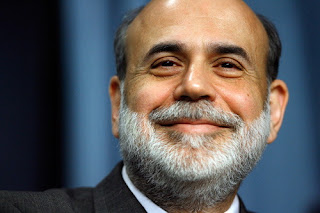

Friday, April 23, 2010
Rating Agencies attempt to explain their overall greed and incompetence
4/23/10
Must see TV continues this week with yet another hearing on the “Wall Street and the Financial Crisis”. This week’s host is the Permanent Subcommittee on Investigations with guest appearances by representatives from Standard and Poor’s and Moody’s. During the housing boom, they were the equivalent of the USDA rating an insect infested beef carcass as U.S. Prime.
Here are some of today’s highlights from today’s episode:Eric Kolchinsky, who was in charge of the Moody's unit that rated subprime collateralized debt obligations (CDO’s):
Raymond McDaniel, chairman and chief executive of Moody’s:
Frank Raiter, (former managing director at Standard and Poor's and head of the residential mortgage unit):

Must see TV continues this week with yet another hearing on the “Wall Street and the Financial Crisis”. This week’s host is the Permanent Subcommittee on Investigations with guest appearances by representatives from Standard and Poor’s and Moody’s. During the housing boom, they were the equivalent of the USDA rating an insect infested beef carcass as U.S. Prime.
Here are some of today’s highlights from today’s episode:Eric Kolchinsky, who was in charge of the Moody's unit that rated subprime collateralized debt obligations (CDO’s):
- “people across the financial food chain, from the mortgage broker to the CDO banker, were compensated based on quantity rather than quality".
- "The situation was no different at the rating agencies."
- “I believed that to assign new ratings based on assumptions which I knew to be wrong would constitute securities fraud”
Raymond McDaniel, chairman and chief executive of Moody’s:
- "We, like many others, did not anticipate the unprecedented confluence of forces that drove the unusually poor performance of subprime mortgages in the past several years".
- Moody's "is certainly not satisfied with the performance of our ratings during the unprecedented market downturn of the past two years."
Frank Raiter, (former managing director at Standard and Poor's and head of the residential mortgage unit):
- "success bred complacency and an aversion to change" within top management of rating agencies.
- Senior managers were "focused on revenue, profit, and ultimately share price"

3 rating agencies competing for another mortgage portfolio
Tuesday, April 13, 2010
The Most Ridiculous Excuse Ever: "No One Saw The Crisis Coming" (Tech Ticker)
Tech/Ticker
So for folks like Bob Rubin (former Treasury Secretary and Citi advisor) and Alan Greenspan (former Fed Chair) to suggest that the financial crisis was impossible to foresee is disingenuous. The particulars of the crisis--the when, what, and how--might have been impossible to foresee. But the idea that, someday, there might be a day of reckoning, and that this day of reckoning might catch people by surprise, is as basic as economic and market forecasting gets.
Ken Posner, a former financial-services analyst at Morgan Stanley and author of Stalking The Black Swan, says that what people need to do is prepare themselves for such crises and behave as though they might occur anytime. He also says that, when the crises do occur, people in power need to learn to see them faster--and react accordingly.
Robert "Ransack" Rubin pulled in a cool $126 million in cash and stock during his 8 year stint with Citigroup. The fleecing of America continues and in the words of Steve Urkel, "Did I do that"?
So for folks like Bob Rubin (former Treasury Secretary and Citi advisor) and Alan Greenspan (former Fed Chair) to suggest that the financial crisis was impossible to foresee is disingenuous. The particulars of the crisis--the when, what, and how--might have been impossible to foresee. But the idea that, someday, there might be a day of reckoning, and that this day of reckoning might catch people by surprise, is as basic as economic and market forecasting gets.
Ken Posner, a former financial-services analyst at Morgan Stanley and author of Stalking The Black Swan, says that what people need to do is prepare themselves for such crises and behave as though they might occur anytime. He also says that, when the crises do occur, people in power need to learn to see them faster--and react accordingly.
Robert "Ransack" Rubin pulled in a cool $126 million in cash and stock during his 8 year stint with Citigroup. The fleecing of America continues and in the words of Steve Urkel, "Did I do that"?
Monday, April 12, 2010
Diana Olick Commercial Real Estate Defaults and Foreclosures
Diana Olick: Moody's downgrades 200 tranches, homes in foreclosure reach a new record, and Goldman Sachs estimates 7 percent of commercial loans will go bad and banks have only written down about 1/2 of this amount.
Thursday, April 8, 2010
Chuck Prince Gets Grilled: $13 billion or $55 billion Chuck?
Thanks to Huffington Post:
Commission chairman Phil Angelides grilled Rubin and Prince about Citigroup's holdings of toxic securities related to the subprime market. In the below clip, Angelides questions Prince about Citi's exposure in the fall of 2007.
At issue is whether or not Citi told analysts that the bank's exposure to subprime mortgage market was actually much smaller than it was admitting internally.
Analysts were told that Citi had $13 billion in subprime exposure -- but an Citi's board and audit committee were told that the bank's exposure was more than $50 billion, Angelides said.
Prince's response, if you can call it that, was essentially non-committal and evasive.
Commission chairman Phil Angelides grilled Rubin and Prince about Citigroup's holdings of toxic securities related to the subprime market. In the below clip, Angelides questions Prince about Citi's exposure in the fall of 2007.
At issue is whether or not Citi told analysts that the bank's exposure to subprime mortgage market was actually much smaller than it was admitting internally.
Analysts were told that Citi had $13 billion in subprime exposure -- but an Citi's board and audit committee were told that the bank's exposure was more than $50 billion, Angelides said.
Prince's response, if you can call it that, was essentially non-committal and evasive.
Tuesday, March 16, 2010
Michael Lewis with Jon Stewart: "At no point anybody says this is wrong"
Michael Lewis discusses Wall Street practices with Jon Stewart. The self proclaimed "best and brightest" chose not to see the risk. Wall Street simply disguised the risk.
When you tell a lie long enough, you start to believe it. The believing in a lie could explain Turbo Tax Timmy, Hanky Panky Paulson and Helicopter Ben stating the bailout was for Main Street.
Wall Street firms actually forgot they rigged the market, yet everyday, CNBC parades around fund managers touting their favorite stocks and bullish outlooks regardless of fundamentals, forgetting they too forgot about their rigged market.
When you tell a lie long enough, you start to believe it. The believing in a lie could explain Turbo Tax Timmy, Hanky Panky Paulson and Helicopter Ben stating the bailout was for Main Street.
Wall Street firms actually forgot they rigged the market, yet everyday, CNBC parades around fund managers touting their favorite stocks and bullish outlooks regardless of fundamentals, forgetting they too forgot about their rigged market.
| The Daily Show With Jon Stewart | Mon - Thurs 11p / 10c | |||
| Michael Lewis | ||||
| ||||
Monday, March 15, 2010
Michael Lewis on 60 Minutes: "Wall Street is able to delude itself because it's paid to delude itself.
Two-part special on CBS's 60 minutes:
Michael Lewis: "The incentives for people on Wall Street got so screwed up, that the people who worked there became blinded to their own long term interests. And because the short term interests were so overpowering. And so they behaved in ways that were antithetical to their own long term interests."
"I'm afraid that our culture will come to the conclusion, 'cause it's always the easy conclusion, that everybody was just a bunch of criminals. I think the story is much more interesting than that. I think it's a story of mass delusion," Lewis said.
"From the time I was at Salomon Brothers, it was incredible to me that the firm could advise customers what to buy and sell," he added. "At the same time, they are betting on the things that they're trying to sell their customers. So I might call you up and say, 'Wow, these subprime mortgage loans, they look really, really good. This pile over here, you oughta invest in that pile. ' And meanwhile, the traders behind me are betting against it.'"
"Wall Street is able to delude itself because it's paid to delude itself.
Part 1
Watch CBS News Videos Online
Part 2
Watch CBS News Videos Online
Michael Lewis: "The incentives for people on Wall Street got so screwed up, that the people who worked there became blinded to their own long term interests. And because the short term interests were so overpowering. And so they behaved in ways that were antithetical to their own long term interests."
"I'm afraid that our culture will come to the conclusion, 'cause it's always the easy conclusion, that everybody was just a bunch of criminals. I think the story is much more interesting than that. I think it's a story of mass delusion," Lewis said.
"From the time I was at Salomon Brothers, it was incredible to me that the firm could advise customers what to buy and sell," he added. "At the same time, they are betting on the things that they're trying to sell their customers. So I might call you up and say, 'Wow, these subprime mortgage loans, they look really, really good. This pile over here, you oughta invest in that pile. ' And meanwhile, the traders behind me are betting against it.'"
"Wall Street is able to delude itself because it's paid to delude itself.
Part 1
Watch CBS News Videos Online
Part 2
Watch CBS News Videos Online
Tim Geithner January 2010:
"The steps the government took to rescue AIG were motivated solely by
what we believed to be in the best interests of the American people".
Subscribe to:
Posts (Atom)