"Our Children and Grandchildren are not merely statistics towards which we can be indifferent" JFK
Showing posts with label High Frequency Trading. Show all posts

Friday, May 6, 2011

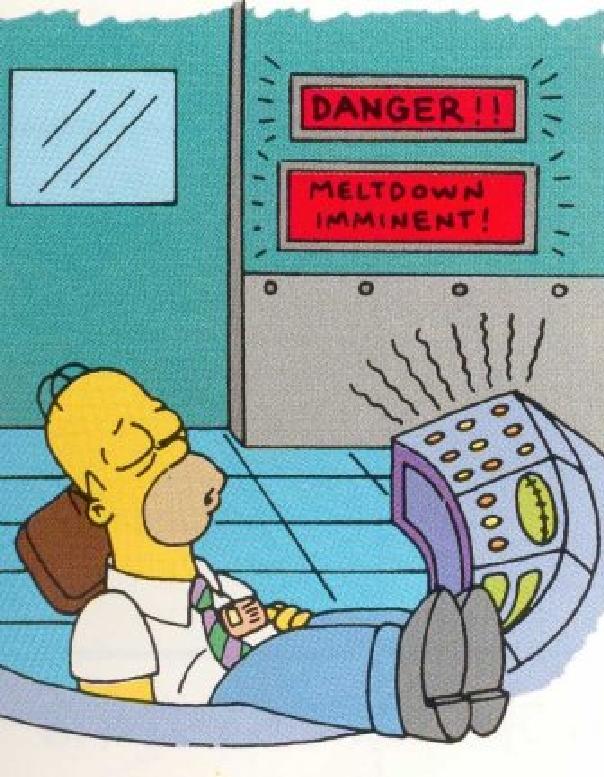
The itsy bitsy $SPDR went up the water spout. It's okay now, the spout is clear...

The itsy bitsy $SPDR went up the water spout.
Down came the flash crash pain, and washed the spider out.
Up came the Bernank, and dried up all the pain,
and the itsy bitsy SPDR went up the spout again.


Happy Anniversary Flash Crash

5/6/11
Themis Trading, LLC
By: Joe Saluzzi

There has been much hype this week about today’s Flash Crash Anniversary.  We have certainly contributed with some comments about what we think has not changed and how we think another flash crash could happen again.  But up until now, the pro-HFT, status quo crowd has been pretty quiet.  Guess they think if they don’t call attention to it, then maybe the critics will just go away.  Well, apparently, they couldn’t hold out any longer and we have been treated with some quotes from the “don’t change anything or I’ll take my liquidity and go home crowd”.  We will first post the pro-HFT comment and then offer the Themis translation.  First we have the COO from the CME Group making some comments read article here.

Comment: “The SEC came in quickly with the circuit breakers proposal and was implemented in record time”

Translation: The public thinks they are protected know from flash crashes but the current circuit breakers only cover the Russell 1000 stocks and some ETF’s


Monday, February 7, 2011

Stock Market Controlled by Machines (Joe Saluzzi), A Must Listen Interview

50-70% of all trades being conducted by
algorithms at micro-second time intervals

Chris Martenson.com
Make sure to review "Crash Course"
2/4/2011

Joe Saluzzi, co-founder of Themis Trading LLC and outspoken exchange expert, is concerned with how high-frequency trading has brought the capital markets into uncharted - and dangerous - territory.

"Things have changed," he cautions. With 50-70% of all trades being conducted by algorithms at micro-second time intervals, real human traders are increasingly challenged to understand how our markets actually work. "No longer do the technical patterns - that have lasted for years and years, and are written about all over - work anymore."

In the following interview, Joe and Chris plunge into "dark pools" and other poorly-understood elements of our now-machine-dominated financial exchanges. The current system is fraught with risks of further "flash crash"-like disruptions, and at a fundmental level, feels a lot like sanctioned theft by the deep-pocketed institutions who can outspend on technology and speed. This is an important interview for anyone involved in trading (professionally or personally), as well as investors who want to know how today's markets truly operate.

In this podcast, Joe sheds light on why:
  • The flash crash happened and why our vulnerability to future crashes is even higher now.
  • How the majority of trades that happen on a daily basis are now conducted by machines that have no underlying concern or understanding for the companies who's securities they trade. The market has become volume for the sake of volume - which is not healthy.
  • How the complexity and pace of the current technology driving trades has become so complex that it has effectively evolved beyond our ability to fully understand its risks.
  •  Why the government agencies responsible for understanding and overseeing exchanges are woefully under-resourced and unprepared to be effective in this new era.
  • How the average trader is destined to lose in today's market, while the big banks & HFT firms who can afford to win the arms race are making essentially-guaranteed profits.

Transcript of Podcast

Hello...anyone...anyone???

The mission of the U.S. Securities and Exchange Commission is to protect investors, maintain fair, orderly, and efficient markets, and facilitate capital formation.

The SEC oversees the key participants in the securities world, including securities exchanges, securities brokers and dealers, investment advisors, and mutual funds. Here the SEC is concerned primarily with promoting the disclosure of important market-related information, maintaining fair dealing, and protecting against fraud.


Saturday, January 22, 2011

Credit Suisse is launching a trading venue that will keep HFT traders at bay (Jim McTague)

High-frequency trading firms love to buy from
and sell to "dumb" individual
and institutional investors.

By Jim McTague 
Barron's
1/22/2011

Yummy, yummy! The good news for high-frequency traders is that juicy retail sheep again are grazing in the domestic equities market, just waiting for the slaughter.

The latest data show the first major weekly inflow of retail investment money into domestic equity funds since the flash crash this past May. These investors plunked down $3.8 billion into the equity funds the week ending Jan. 12, according to the Investment Company Institute. During 2010, they withdrew an estimated $82 billion, in part because they were spooked by the flash crash, when the Dow plunged more than 700 points in 10 minutes and then climbed 300 points in the next 10. That thrill ride was aided and abetted by high-frequency traders using over-clocked computers to front-run panicked retail investors.

These traders program their computers to buy and sell millions of shares of stock every minute, based on short-term trends, not the underlying fundamentals of the companies. Risk-averse to an extreme, their goal is to make a penny or so on each trade. It's easier for a machine to predict correctly if it is looking ahead only by a second or two. If the traders execute the same trades simultaneously, they can trigger dramatic market swings.

High-frequency trading firms love to buy from and sell to "dumb" individual and institutional investors. Individuals tend to place market orders rather than using limit orders at or below the bid price. Thus, they pay the maximum. As for mutual funds and other institutional investors, they are easily front-run by the new trading operations, which have faster access to market data as well as faster trading computers. If the funds are buying a particular stock, the traders' computers can detect this activity, buy up shares ahead of the fund and sell it back to the fund for a profit of a cent or two. This runs up the costs for mutual fund investors.

THE SECURITIES AND EXCHANGE COMMISSION has been mulling some curbs on high-frequency trading to shield long-term investors. But the plodding agency likely will take a year or two to enact any changes, and by then the math whizzes at the trading firms will have figured out another way to make chops out of the retail and institutional lambs.

Fortunately, there is a promising free-market response. Credit Suisse in March will launch what it calls the Light Pool, a trading venue for mutual funds and institutional investors that purposely puts high-frequency traders at a disadvantage. This is revolutionary. High-frequency traders are courted by the 13 major stock exchanges because they deliver trading volume and pay big bucks for concierge services, like the direct data feeds from the exchanges that give them a crucial informational head start of several milliseconds. Dan Mathisson, managing director of Credit Suisse's advanced-execution services, says the trading firms will have to route trades to the Light Pool through an outside stock exchange. "That extra hop could add 100-to-200 milliseconds to a trade, enough time to be very discouraging to high-frequency traders," he says.

High-frequency firms claim they bring benefits to the market, such as liquidity, and thatcritics exaggerate their alleged abuses. Yet Light Pool is getting strong indications of interest from institutional investors. Sal Arnuk of Themis Trading in Chatham, N.J., compares the new venue to the "tipping of a hat" to criticisms of the new traders that he and colleague Joe Saluzzi raised in 2008.

Too bad there's no Light Pool for individuals yet. Out among the wolves, they're apt to get eaten up again and again. Add'l good articles from Jim McTague


Friday, November 19, 2010

Market Vulnerable to Another Flash Crash (Joseph Saluzzi)

“But can we trust a market where most
of the volume is concentrated in just a few stocks?”

By: John Melloy
Executive Producer, Fast Money
11/19/10

Stock market activity is still dominated by high-frequency trading and concentrated around just a few stocks and exchange-traded funds, creating an environment that will likely lead to another ‘Flash Crash’, so said a widely followed and esteemed trading expert.

“Markets that are not built on fundamental demand from long term investors are subject to cracks like we saw on May 6th,” said Joseph Saluzzi, co-head of the trading desk at Themis Trading, an agency brokerage firm. “When shocks like sovereign debt problems hit the market, the lack of real demand is exposed and a market which is not structurally sound can produce violent reactions.”

Saluzzi was featured last month in a 60 Minutes episode exploring the dangers of high frequency trading. This summer after the Flash Crash, his partner, Sal Arnuk, was asked to participate in an open meeting with the Securities Exchange Commission on market structure. They are some of the few electronic trading experts willing to talk about the practice because they guide clients around high-frequency trading instead of practice it themselves.

The firm’s renewed prediction today for another violent sell-off is based on a simple breakdown in the market basics of supply and demand.

“Prices set by the stock market are thought to be efficient and reflect an accurate measure of supply and demand,” wrote Saluzzi in the note. “But can we trust a market where most of the volume is concentrated in just a few stocks?”

On Thursday, General Motors [GM 34.26 0.07 (+0.2%) ], Citigroup [C 4.268 -0.032 (-0.74%) ] and Ford [F 16.28 0.16 (+0.99%) ] accounted for 15 percent of the shares traded, according to Themis. This kind of concentration does not occur in a market operating under the basic economic function of supply meeting demand, they argue. How could 15 percent of actual investors want to buy or sell these three stocks in a single day?

They also cite the volume in ETFs, baskets of whole stocks that can be bought and sold as easily as a single share. Trading in the SPDR S and P 500 [SPY 120.29 0.3325 (+0.28%) ], PowerShares QQQ Trust [QQQQ 52.47 0.04 (+0.08%) ] and iShares MSCI Emerging Markets [EEM 46.51 0.03 (+0.06%) ] are typically among the most actively traded vehicles on U.S. exchanges every day. Many individual investors have taken to these products in order to avoid single-company risk.

The regular long-term investor, who doesn’t buy or sell in milliseconds, is essentially gone from the market, Themis said. According to ICI data, there have been 28 consecutive weeks of domestic equity outflows since the May intraday crash where the Dow lost nearly 1,000 points in minutes. Turnover is now so great that the average holding period for stocks is just three months, according to Alan Newman’s Crosscurrents newsletter.

To be sure, stocks have recovered the losses from the May crash and then some, hitting a new high for the year just earlier this month. Some argue that the long-term investor is coming back soon and will add another leg to this bull market.

Maybe they decided to begin by buying GM, Ford and Citigroup yesterday.


Thursday, November 18, 2010

Emily Lambert: GM handed its keys to the poster child for high-frequency trading (great job Emily!)

The exchange anointed Getco a
designed market maker earlier this year.

By Emily Lambert
Trading Places
Forbes
11/18/10
When General Motors’ stock started trading Thursday on the New York Stock Exchange, it marked a milestone. Not just for the car maker formerly known as Government Motors. The day also represented an important coming out of sorts for Getco, the high-frequency trading shop that handled the opening of GM trading.

It’s a stunning ascent. A year ago Getco was basically a mysterious firm hiding out behind a closed door in Chicago. Now it has handled the biggest offering in history, selected over some far more famous and established firms including Bank of America and Goldman Sachs. It looks like Getco, not long ago an outsider, is part of the establishment and a pillar of the American economy, or something of the sort.

Why Getco? “No comment,” says a GM spokesman. Getco is similarly tight-lipped.

To be sure, Getco’s role should not be confused with that of the underwriter at an investment bank. Underwriters prepare a company for a stock launch. They take the company on a road show to meet potential investors, and they set the opening price for the stock. For this, they take their mammoth fees. (Supposedly these fees are clearly found in the prospectus. If you see them, please e-mail me.) GM’s lead underwriters were Morgan Stanley and JP Morgan Chase.

But once those underwriters did their work for GM, it was Getco’s turn. GM selected Getco to be what the exchange calls a “designated market maker.” This is the company that NYSE has tasked with maintaining a fair and orderly market in the stock once it trades. Getco, as this super-special market maker, has some obligations. It promises to buy and sell the stock at the best going price and to trade even when stock price starts to get out of whack, to smooth out volatility.

It also makes money for this. It doesn’t collect fees like the underwriters do, but it will be rewarded in an ongoing fashion through its trades. It gets certain advantages that can lean the market in its favor and can lead to nice profits. There’s no guarantee of profits, and making markets like this has turned into a competitive space. But it can be a sweet deal. Why else would a firm like Getco want the job?

The designated market maker is a variation on the old “specialist” firm. Those firms were also tasked with keeping an orderly market but were accused by many of taking advantage of their role. The specialist firms generally had and exploited big informational advantages. NYSE replaced specialists with the watered-down version of designated market maker after penny spreads and electronic trading made the old boys obsolete and uncompetitive.

The exchange anointed Getco a designed market maker earlier this year. At that point Getco clearly became a “market maker” and differentiated itself from other high-frequency firms that have different trading strategies. But with GM, Getco has symbolically arrived.

It’s pretty nice to be Getco now. There are no guarantees, but presumably they’ll take advantage of the trading perks they get in GM stock and turn that into a sizeable profit. If you have to pick just one firm that’s really driving Wall Street, many will still and perhaps rightly see it as the bloodsucking vampire squid, I mean, Goldman Sachs. Investment banks are the powerhouses. But that said, in its big and fancy (re)debut, GM handed its keys to the poster child for high-frequency trading.


Saturday, October 16, 2010

Sunday Comics "Early Edition" (Economy, Federal Reserve, GM, HFT, QE2, Robo-Signing)

Did you hear the one about GM's Ed Whitacre IPO ballpark $$?
"It's a little to early to say, but it is going to be somewhere in
the $20 range … $20, $25, something like that would be my guess"


Your application for High Frequency Trader has been rejected.
If you watched 60 Minutes, you would have known
that humans are too slow.


Left a mundane hair stylist career for an exciting
future in foreclosure robo-signing


I'm telling you Ponch, this penny stock gig is huge...


QE2...QE3...QE4...QE5...QE6...


General Motors interim seatbelt fix on 322,409 recalled Impalas


Former Federal Reserve Vice Chairman Donald Kohn
said impediments to economic growth are fading and
the recovery should quicken next year.
“A number of those headwinds are abating,”


“MetLife Home Loans temporarily postponed
foreclosure sales in some states.”
“Foreclosure process irregularities” could force the company
to hold property longer, Moody’s said.


Monday, October 11, 2010

Dylan Ratigan...is the stock market rigged?

Dylan Ratigan...is the stock market rigged? Why does the SEC allow ping pong being played with people's retirement programs? The high frequency traders now represent 50 to 70% of the daily trading volume. High frequency traders cancel over 90% of all orders! Gee, I wonder why?

Everyone needs to sit up and take notice that this is no longer a market, it has become an extension of adolescent gamers playing with everyone's investment money. REMEMBER: humans are not trading as they are too slow..REALLY!! When one group represents 50 to 70% of the daily trading volume, it is not liquidity....it is pure and simply manipulation and Flash Crash II is just around the corner....you have been warned!

60 Minutes: Math wizards writing algorithmic code now control stock market trading.

In a secret new building in New Jersey, high-speed computers decide which stocks to buy and sell. Could this kind of automated "trading floor" lead to Wall Street's next "flash crash"?
 

The Real Flash Crash Culprits and Meet the Flash Crash Scapegoat (by Jim McTague)


By Jim McTague
Barron's
10/9/10

MEET THE FLASH-CRASH scapegoat. A report by regulators blamed May's spectacular market break on a single trade by a single "mutual fund complex" identified in the press as Waddell & Reed.

This was as ludicrous as blaming Mrs. O'Leary's cow rather than lax building codes for the Great Chicago Fire. The official explanation of the May 6 tumult, which saw the Dow plunge by nearly 1,000 points before largely recovering, does not hold up beyond a reasonable doubt.

In fact, the jargon-encrusted back pages of the report suggest that far greater damage was inflicted on investors that day by their brokerage firms. The brokers abandoned them to the wildfire. Call it progress: Never before have so many lambs been roasted so quickly.

The "Findings Regarding the Market Events of May 6, 2010," by the staffs of the Commodity Futures Trading Commission and the Securities and Exchange Commission,said that although volatility was rising and sellers began to outnumber buyers, a mutual-fund complex initiated a program to sell some 75,000 E-Mini contracts on the Standard & Poor's 500, valued at $4.1 billion, as a hedge to an existing equity position. E-Minis are electronically traded portions of regular futures contracts. The regulators faulted this fund complex for using a program to feed orders into the E-Mini market at an execution rate of 9% of the total trading volume, and without regard to price or time.

HERE'S WHERE THE REGULATORS' story starts to fall apart. CME Group, owner of the exchange where the E-minis trade, said the sell order was consistent with market practices. Furthermore, only half the order had been entered as the market fell. And it had been broken up into small orders—nine out of every 100 coming into the market. In any event, this one trade couldn't have spooked investors because the market is anonymous. Traders didn't see a single, large seller. What they saw was continuous action.

The fact is, high-frequency traders and brokerage houses acting as market makers did more to drive down prices. They stopped buying and started selling.

The brokerage firms' behavior was particularly galling, though by no means illegal. They stopped automatic execution of customer orders, also known as internalization, which on most days accounts for nearly 100% of retail trades.

A brokerage firm will try to match one customer's order with that of another customer in-house. If the firm can't make the trade, it sends the order on to an executing broker. The big ones are Knight Capital, Citadel and UBS. The executing broker will generally take the opposite side of the customer order because retail customers tend to buy high and sell low, so it's easy to make money off them.

In the rare instances when an executing broker demurs, he sends the trade to a dark pool, usually one owned by his firm. (Dark pools are electronic-trading venues where institutional investors trade stocks away from the public stock exchanges.) If the dark pool can't execute the trade, it is sent to one of the stock exchanges. This largely automated process occurs in sub-seconds.

On May 6 when the market fell out of bed, the report says blandly, some of these players reduced executions of sell orders but continued to execute buy orders. In other words, they'd sell stock to a retail customer but wouldn't buy stock from a retail customer. They wanted to get rid of their own inventories, not accumulate more shares. So they sent the customer sell orders onto the swamped stock exchanges.

Here's one measure of the damage: Twenty thousand trades, totaling 5.5 million shares, were executed at a price 60% or more away from pre-Flash-Crash price levels, and thus later were deemed invalid. At least half those were retail orders. And, of course, that says nothing of the countless trades done at discounts of less than 60% but still large.

IT WAS A VICIOUS CYCLE. Retail stop-loss and market orders were converted to limit orders by internalizers prior to routing to the exchanges. A limit order requires the trade to be executed at a specific price, whereas a market order is the best price available. If the limit order wasn't filled because the stock's price had fallen, it was kicked back to the internalizer who, in turn, set a new, lower limit price and resubmitted it. Orders were kicked back multiple times because prices were collapsing so rapidly. They followed the prices down, "eventually reaching unrealistically low bids," as the report puts it.

Brokers meant well. Chris Nagy, managing director of order-routing strategy for TD Ameritrade, told me by e-mail, "In seeking best execution, a broker may use various methods to help ascertain a better price for the client. This tactic is somewhat common to protect unknowing investors from wild price swings, although May 6 was a whole different animal. It's important to note that when this type of strategy is used, it's generally sub-second, and many exchanges don't accept market orders."

SEC Chairman Mary Schapiro expected the report to boost investor confidence. Ba-a-a-h: The goat story is too hard to swallow.

Friday, October 8, 2010

60 Minutes: Steve Kroft Gets A Rare Look Inside the Secretive World of "High-Frequency Trading"

How Speed Traders Are Changing Wall Street

"Humans are way too slow to trade on the kinds
of opportunities that we're trying to capture,"

(CBS) New Jersey stock trader Manoj Narang says his firm has never had a losing week because his super computers are fast enough to capitalize on split-second opportunities in the market. Narang and other traders are using a legal but controversial technique called "high-frequency trading."

It played a role in a 15-minute, 600-point market meltdown last spring now known as the "Mini Market Crash." Correspondent Steve Kroft talks to Narang in a rare chance to see such a business up close. He also speaks to SEC Chair Mary Schapiro - who has high frequency trading in her regulatory sights - and others for a "60 Minutes" report to be broadcast Sunday, Oct. 10, at 7 p.m. ET/PT.

High frequency traders rely on mathematicians and computer experts to write electronic trading programs and they use expensive computers to run them. Many of the country's large financial institutions do high frequency trading and it is estimated that from 50 to 70 percent of all U.S. stock trades are made this way. Humans are becoming less involved. "Humans are way too slow to trade on the kinds of opportunities that we're trying to capture," says Narang. "Opportunities that exist for only fractions of a second," he tells Kroft.

The opportunities are gleaned from information that all traders have access to. But those with high speed computers like Narang's get that information a split second faster and can act on it just as fast. The trades can involve such a high volume that fractions of pennies made on each share of stock can add up to millions of dollars in profits. "We've had two or three days in a row where we lose money but we've never had a week, so far, where we lost," he tells Kroft. "We've never had a month that was a loser for us."

Narang and staffers at his company, Tradeworx, program his computers with algorithms instructing them to buy or sell certain stocks upon specified conditions, such as price. He trusts the machine to do it all. "The computer is monitoring real time data and knows what to do," says Narang. "Computers are very predictable because they tend not to screw up. They tend to do what they are told."

But computers can create turmoil in the market, and the results can be devastating. The market crash last May 6 was triggered by one computer algorithm that sold $4.1 billion of securities in a 20-minute period. The high-frequency trading programs' response to that - buying many of them up and selling them just as fast - exacerbated an already bad situation.

"The events of May 6th scared people," says SEC Chair Mary Schapiro. She had already proposed more transparency rules for such trading operations before that event, but is considering even more now. "It's unsettling for all investors if an algorithm behaves in an aberrant way and causes a lot of volatility, or causes markets to act in an irrational way," Schapiro tells Kroft.

Some financial people think high-frequency trading with its reliance on speed rather than hard facts about the company or market is bad for Wall Street. "Valuation is irrelevant. It's just about moving the price up and down the ladder…so you have to question the true valuation of the markets now," says Joe Saluzzi, an institutional trader at Themis Trading. He also says he sees predatory behavior made possible by the speed advantage, where practitioners can execute and cancel thousands of trades to see which way a market is going and then capitalize on that advantage.

But to Larry Leibowitz, the chief operating officer of the New York Stock Exchange, the charges are nothing new. "There's always been charges for as long as trading has existed that people are front running orders, manipulating stocks," he says. Add in the mystery a machine like a computer can inject into the formula and the stage is set for mistrust he says. "I think high frequency trading is the natural evolution of applying technology to the problem of how do I trade the cheapest and most efficiently," Liebowitz tells Kroft.

Wednesday, October 6, 2010

Non CNBC News

For those with inquiring minds and a thirst that
is not quenched from CNBC kool-aid:

Trading Pennies Into $7 Billion Drives High-Frequency’s Cowboys (Bloomberg)

IMF Cuts 2011 Global Growth Prospects (WSJ)

Supreme Court Arguments Over Funeral Protests (NPR)

Sun Chips Bag to Lose Its Crunch (WSJ)

Whitney Falters in Trying to Repeat Citigroup Success (Bloomberg)

Goldman Sachs Says U.S. Economy May Be ‘Fairly Bad’ (Bloomberg)

New HUD program offers up to 24 months of mortgage assistance to unemployed (Housing Wire)

Thursday, September 16, 2010

Wall Street and the U.S. Stock Market Celebrates Chronic Pain of Main Street

Wall Street and the U.S. Stock Market
Celebrates Chronic Pain of Main Street


Once again, Wall Street and the U.S. Equity Market displayed their complete and utter indifference to the chronic pain experienced by many Main Street Americans.


Data released today included 1 in 7 Americans lives in poverty, the largest number of people in 51 years; number of Americans without health insurance rises to 50.7 million; foreclosures hit another record in August as banks repossessed 95,364 properties (up 25% from August 2009); 15.1 million children under the age of 18 live in poverty and 10% of children under the age of 18 have no health coverage.

450,000 Americans filed for initial jobless claims however this figure was "better than expected" and the Philadelphia Fed Survey clocked in at a reading of -0.7 versus an estimate of +0.5 while new orders were at the lowest level since June 2009.

Federal Express announced that they would be laying off 1,700 workers and close 100 facilities however they "guided higher" on future earnings. Duh, how unique, cut employees to increase earnings...

The Dow at the low was down 51 points however once Wall Street realized it was just Main Street that was being sucked down the drain, the light hearted high frequency, algorithmic boys and girls managed to close the Dow up 22 points.

The more pain incurred by Main Street producers a sugar high gain for the gamers on Wall Street....what happens when High Fructose Corn Syrup simply becomes Corn Sugar?

Wednesday, September 15, 2010

$10 billion withdrawn from U.S. Equity Market and Market spikes to the close courtesy of the Federal Reserve Bank of NY

$10 billion withdrawn from the U.S. Equity Market in two weeks
and the equity market celebrates with a spike to the close
on anemic trading volume once again.

Washington, DC, September 15, 2010 - Total estimated inflows to long-term mutual funds were $5.24 billion for the week ended Wednesday, September 8, the Investment Company Institute reported today. Flow estimates are derived from data collected covering more than 95 percent of industry assets and are adjusted to represent industry totals.

Equity funds had estimated outflows of $1.06 billion for the week, compared to estimated outflows of $9.65 billion in the previous week. Domestic equity funds had estimated outflows of $2.24 billion, while estimated inflows to foreign equity funds were $1.17 billion.

Total Domestic Equity Flows/Week Ending
-$2.235 Billion 9/8/10
-$7.707 billion 9/1/10
-$4.311 billion 8/25/10
-$2.712 billion 8/18/10
-$2.077 Billion 8/11/10
-$2.122 Billion 8/4/10
-$11.120 Billion for the month of July 2010
-$7.519 Billion for the month of June 2010
-$19.066 Billion for the month of May 2010

Since April 30th, 2010, $58.869 BILLION has been withdrawn from Domestic Equity Funds (This is the 19th sequential weekly outflow from US stocks).

Zero Hedge Commentary...as only Zero Hedge Does!
The kicker: the S&P is at the level it was when the outflows began back during the flash crash. If that doesn't restore all your confidence that Uncle Sam will be so good at managing the market (just like he has done with everything else), nothing else will.

Throw in a little HFT, a little subpennying, a little Flash trading, a little DMA (Direct Market Access) trading, a little quote stuffing, a little hedge fund clubbing, a little specialist front running, a little daily flash crash in big caps like Nucor Steel, and you can see why next week we will most certainly have our first inflow in 20 weeks. Or not.

It doesn't matter. Nobody that is made of carbon, or who doesn't already have direct access to the Fed for zero cost funding, is trading stocks anymore.


Tuesday, September 14, 2010

112 stocks now account for half of the day's volume (Zero Hedge)

Another most informative post courtesy of Zero Hedge
Market Manipulation Reaching Absurd Levels
112 stocks represent 50% of daily volume!!

The latest Abel/Noser analysis has been released and according to the data analytics firm just 112 stocks now account for half of the day's volume, the top 20 stocks account for 26% of all domestic volumes, and the first 1,029 stocks are responsible for 90% of all volume, meaning the remaining 17,349 account for just 10% of all dollar traded.

These are also the stocks where HFT will never tread, so if anyone wishes to avoid the HFT marauders, just stay away from the top names. And since the last time we did an update, there have been some notable changes in the top 10 most traded names: in June, courtesy of the GOM catastrophe, BP and Exxon were solidly in the most traded stocks. Since then they have fallen way down in the listing, having been replaced with two other M and A candidates, HP and Potash, in 7th and 10th place, respectively.

Intel has also done a great job of getting raped daily by HFTs, moving up from 19th place, to 8th. Yet not surprisingly, as the total volume of shares has fallen off a cliff since June, the 16th most active stock, Google, just barely makes the $1 billion in principal traded day cutoff at 16th place, while in June, all of the top 20 names were trading above $1.2 billion notional daily. And once again, just like every other month, the most actively traded security continues to be the SPY.

As ever more of the volume is concentrated among fewer and fewer stocks, it is certain that one day, when a top 10 name crashes, will crash the the entire market, which continues to trade near record-high implied correlations.

Here are the specific findings from August data:
  • SPY (SPDR Trust Series 1) accounted for over 10% of the total domestic principal traded.
  • The cumulative volume of the top twenty equities, sorted by average daily principal traded, represent over 26% of domestic principal traded.
  • Once you reach just the 112th ranked symbol, you have accounted for over half of a day’s volume.
  • The first 1,029 names account for a full 90% of all volume.
  • The remaining 17,349 equities* account for the remaining 10% of all dollars traded.  


Hey Mary Schapiro, great information and no charge is one click away Zero Hedge
 
Zero Hedge Prior Update

Monday, September 13, 2010

FINRA censured and fined New York-based Trillium Brokerage Services, LLC,

Trillium traders created a false appearance
of buy- or sell-side pressure.
A.K.A. MARKET MANIPULATION

WASHINGTON--(BUSINESS WIRE)--The Financial Industry Regulatory Authority (FINRA) today announced that it has censured and fined New York-based Trillium Brokerage Services, LLC, $1 million for using an illicit high frequency trading strategy and related supervisory failures. Trillium, through nine proprietary traders, entered numerous layered, non-bona fide market moving orders to generate selling or buying interest in specific stocks. By entering the non-bona fide orders, often in substantial size relative to a stock’s overall legitimate pending order volume, Trillium traders created a false appearance of buy- or sell-side pressure.

This trading strategy induced other market participants to enter orders to execute against limit orders previously entered by the Trillium traders. Once their orders were filled, the Trillium traders would then immediately cancel orders that had only been designed to create the false appearance of market activity. As a result of this improper high frequency trading strategy, Trillium’s traders obtained advantageous prices that otherwise would not have been available to them on 46,000 occasions. Other market participants were unaware that they were acting on the layered, illegitimate orders entered by Trillium traders.

In addition to the nine traders, FINRA also took action against Trillium’s Director of Trading and its Chief Compliance Officer. The 11 individuals were suspended from the securities industry or as principals for periods ranging from six months to two years. FINRA levied a total of $802,500 in fines against the individuals, ranging from $12,500 to $220,000, and required the traders to pay out disgorgements totaling about $292,000.

Calling Mary Schapiro...Calling Mary Schapiro...
“Trillium’s trading conduct was designed to improperly bait unsuspecting market participants into executing trades at illegitimately high or low prices for the advantage of Trillium’s traders,” said Thomas R. Gira, Executive Vice President, FINRA Market Regulation. “FINRA will continue to aggressively pursue disciplinary action for illegal conduct, including abusive momentum ignition strategies and high frequency trading activity that inappropriately undermines legitimate trading activity, in addition to related supervisory failures.”

FINRA’s investigation found that nine Trillium proprietary traders intentionally created the appearance of substantial selling or buying interest in the NASDAQ Stock Market and NYSE Arca exchange. Trillium’s traders bought and sold NASDAQ securities in this manner in over 46,000 instances, resulting in total profits of approximately $575,000, of which the firm retained over $173,000 and subsequently was required to disgorge. List of the Dirty 11

Friday, September 10, 2010

The Traders Who Skip Most of the Day...welcome to the New and Improved U.S. Equity Market

Does any retail "investor" truly believe they stand a chance? While you are working 10 hours a day or searching for employment to put food on the table for your children, the High Frequency Algorithmic Traders are golfing, playing tennis and catching a few rays of sunshine. This is no longer a market as it has become a video game played for 2 hours per day and the retail investor's retirement funds provides the gamers with profitable entertainment.


Wall Street Journal
By Kristina Peterson
9/10/10
NEW YORK—On the day the "flash crash" bludgeoned the stock market and chaos swept over the floor of the New York Stock Exchange, the founders of Briargate Trading were at the movies.

Rick Oscher and Steven Rubinstein weren't playing hooky. Briargate, a proprietary-trading firm that the two former NYSE floor "specialist" traders started in 2008, is mostly active at the stock market's open and close.

In between, when market activity typically drops, the Wall Street veterans play tennis in Central Park, take leisurely lunches, visit their children's schools and work out at the gym. Dress shoes have been replaced with flip-flops, slacks with cargo shorts. Once during market hours, they walked about five miles and crossed the Brooklyn Bridge to try Grimaldi's pizza.

"We actually planned on working a full day," says Mr. Oscher, wearing a white polo shirt and blue-plaid shorts. "But from 11 to 2, the markets are pretty quiet—what's the point? As a specialist, you have to stand in your spot all day and we did that for 20 years."

Briargate—an anagram of "arbitrage"—isn't the only firm taking an extended recess during the 6½-hour U.S. trading day. Trading has become increasingly concentrated in the first and last hours of the session.

Those two hours now make up more than half of the entire day's trading volume, according to an analysis of data provided by Thomson Reuters. In August, the first and last hour generated nearly 58% of New York Stock Exchange primary volume, up from 45% in August 2005, the analysis shows. The rise of high-frequency trading, where algorithms are used to exploit small discrepancies in high-volume situations, amplifies the concentration of trading at the beginning and end of the day, analysts say.

Heavy trading in the first hour is largely due to the accumulation of orders placed by individual investors and their brokers after the previous day's close, mutual-fund activity and new strategies deployed by institutional investors based on the latest research and overseas trading, says Adam Sussman, director of research at Tabb Group, a financial-markets research firm. Meanwhile, funds that track stock indexes often wait until the final hour to execute trades to better reflect the benchmark measures' last prices.

Focusing trading on those times could limit gains, but Messrs. Oscher and Rubinstein are at peace with that. "Would you rather play tennis or make an extra $80? It's a lifestyle question," says Mr. Rubinstein, who sometimes works remotely from Florida. "I can go play 18 holes of golf and then come back and trade and that's a workday."


"If someone offered us three times what we make to do a real job, we wouldn't do it," Mr. Oscher says. "Money isn't everything. Plus, we'd make terrible employees."

The men, both 42 years old, met 12 years ago as specialists manning posts 10H and 11H for Van der Moolen Holding on the NYSE floor. They rose to oversee floor operations for the Dutch market-maker, but saw the writing on the wall as the era of specialists faded. Van der Moolen eventually sold its specialist arm to Lehman Brothers in late 2007 and filed for bankruptcy in 2009.

The advent of automated trade execution rendered people who could see and direct the order flow less crucial. There was a peak of nearly 50 specialist firms working the NYSE floor in 1990. That has dwindled to five now.

In 2008, the men joined forces with a programmer from Van Der Moolen and started Briargate. The five employees that now comprise Briargate work out of an apartment in a luxury-hotel and condominium complex on Wall Street.

Briargate trades mostly stocks, using computer algorithms that still require human decision-making. Sometimes the firm's programmer is left in charge when the rest of the staff leaves the office.

Mr. Oscher said the firm, which trades only its own money, hedges its risks "so there isn't any scenario that would move our profit and loss beyond boundaries of comfort." Briargate says it didn't sustain losses during the May 6 flash crash because it closes its books when the market tends to be volatile. "We actually had a pretty good day," Mr. Oscher says.

While the firm declined to disclose their returns, Messrs. Rubinstein and Oscher say they make more than they did in their later, leaner years as specialists, though not as much as they did in the late 1990s before the industry started to consolidate.

Mr. Oscher says their compensation is "in line" with what they formerly made as specialists. Successful specialists could make upward of $500,000 at the industry's peak, while partners could bring home more than $1 million.

Both feel their freedom is fragile, as trading invariably carries risks. Says Mr. Oscher: "We say all the time—these are the good old days."

Monday, September 6, 2010

High Frequency Traders: the gatling guns on Wall Street

High Frequency Trading (a.k.a. quote stuffing). Hey, the HFT boys and girls simply bringing liquidity to the U.S. Equity Market.

Chuck Schumer urges slowing down trading

By Jacob Bunger
Wall Street Journal

Let's slow down the market manipulation
U.S. Sen. Charles Schumer urged federal securities regulators to explore ways to slow some high-speed trading at times of market stress and to investigate strategies that have raised concerns of stock manipulation, including one known as "quote stuffing."

The New York Democrat urged the Securities and Exchange Commission to launch a formal inquiry into whether computer-powered trading firms' rapid entering and canceling of stock orders, called quote stuffing, played a role in the so-called flash crash of May 6, and to more broadly reconsider these participants' role in the U.S. marketplace.

"While I acknowledge that technological advances, including [high frequency trading], have brought significant efficiency gains to our markets, I have come to believe that HFT provides less of the benefits to our markets than its adherents claim, and does so at greater cost to long-term investors," Mr. Schumer wrote in a letter to SEC Chairman Mary Schapiro, a draft of which was reviewed by Dow Jones.

SEC representatives weren't available for comment.


The Wall Street Journal reported last week that the SEC has begun looking into whether quote stuffing is putting some investors at a disadvantage by distorting stock prices.

Also under agency scrutiny is a practice known as "sub-penny pricing," where many orders are priced in increments as small as one-tenth of a cent and far away from the most recent price of a stock, raising fears of manipulation.

The SEC should identify firms that frequently pursue such strategies, Mr. Schumer said, and require exchanges and other trading venues to throttle back these firms' trading activity—or that of all participants—when market volatility is on the rise.

Let the quote rest at room temperature
Requiring stock quotes to stand for a set period of time would also help ensure that trading programs can't send thousands of orders if traders have no intention of executing them, he said.


Such a minimum quote lifetime has been suggested by brokerage executives in recent months, but implementing the idea is seen as difficult. Some traders have said it could create the possibility of arbitrage in related securities or derivatives markets.

The recommendations from Mr. Schumer, a senior member of the Senate Banking Committee, follow his call in August for the SEC to create additional requirements for high-speed electronic traders to keep trading in volatile markets. Several such firms that typically provide market liquidity ceased trading amid the flash cash, potentially exacerbating price swings.

Mr. Schumer's comments come as U.S. regulators prepare to deliver a report as soon as this month on the flash crash, which exposed flaws in the infrastructure of U.S. securities markets and thrust computer-driven trading into the spotlight. European regulators and exchange officials are expected to discuss the topic this week at a conference in Interlaken, Switzerland.

Tuesday, August 10, 2010

Zero Hedge: Main Street's Boycott Of Capital Markets Succeeding: Barclays First Casualty, To Fire Hundreds Due To Plunge In Market Activity

Another great post from the fine and informed folks at Zero Hedge. Grandpa opted to alter slightly in keeping with the "grandchild friendly" format.

Zero Hedge:
For the longest time it was consensus thought that only Wall Street could "fiddle" Main Street. The tide is now turning. After what the FT reports was a 16% decline in fixed income, currencies and commodities trading revenues for Q2, coupled with advisory revenues down 17%, the bank is now "planning to cut up to several hundred employees following a sharp fall in market activity in the second quarter.

Sources close to the bank say that the job losses, which could be announced as early as Wednesday, will be spread across BarCap’s sales and trading staff as well as its back office support functions." Too bad the SEC has not, and will not realize that its only function is to restore the faith of the retail investors in the credibility of the capital markets.

Yes, the same retail investor who both on margin and in total has always been the primary driver of stocks. Alas that has not happened and tens of thousands of Wall Streets will soon feel the wrath of Main Street as the boycott of stocks by the broader population comes to fruition, allowing the former "strategists" to experience just how real the difference between the U-3 and U-6 rate is first hand.

News of the cuts is likely to alarm the City as well as Wall Street, where BarCap has a sizeable presence following its acquisition of the US operations of Lehman Brothers at the height of the financial crisis.

It is also likely to raise questions about BarCap’s aggressive expansion in recent years under the leadership of Bob Diamond.

The investment bank generated more than 80 per cent of Barclays’ pre-tax profits in the first half of the year, in spite of a slowdown in activity amid volatile markets and fears of a sovereign debt crisis in Europe.

Without clear signs of a pick-up in client activity, several analysts have flagged concerns about BarCap’s escalating cost base.

BarCap has added almost 4,000 staff since last June – bringing its total headcount to 25,500 – in its drive to join the ranks of the world’s leading investment banks.

That growth, however, has come at a price, with first-half salary and bonus costs across the Barclays group running at nearly £5bn, £1bn higher than the same period in 2009. Most of that growth is attributable to BarCap.

BarCap sources say that, in spite of the cuts, the bank still plans to finish 2010 with a higher headcount than at the end of 2009

And while Barclays may be the first to experience what a complete lockout of retail participation in stocks means, it certainly won't bet the last.

Headhunters that specialise in financial services have warned that unless there is a substantial pick-up in corporate activity in the coming weeks, many more banks will be looking to trim costs by cutting staff.

Just as several recent campaigns have tried valiantly to get Americans to withdraw their deposits from TBTF banks (and unfortunately, have not succeeded...at least not yet), so an ever increasing disclosure into the true criminality of Wall Street's practices has eroded virtually all the credibility of American capital markets, which incidentally was never deserved to begin with.

We can only hope that as headcounts are eliminated in the tens of thousands, and as NY (and other) city income tax revenues plummet, that more and more people will require that the SEC finally do its work, and regain some semblance of control over stock (and other OTC product) trading. Because, as Zero Hedge discloses day after day, the current jungle is a marketplace only fit for algorithms and primary dealers.

And as Barclays has now learned the hard way, neither pay the bills at the end of the day. In the meantime, if nothing changes, we will continue exposing the travesty of US markets day after day, as ever more ill-gotten credibility is destroyed, until the point at which none is left will be the singularity in which Wall Street finally consumes itself.

Whether it is by soft, or hard reset, the change is coming.


Friday, August 6, 2010

Economy as perceived by the Bond Market versus the HFT gamed broken Equity Market

Grandpa's recap of economic perceptions as seen by the bond market (those that understand fundamentals) and the High Frequency Traders gaming a broken U.S. equity market. NUFF Said!

U.S. Economy through the eyes of the bond market


U.S. Economy through the eyes of the HFT gamers equity market